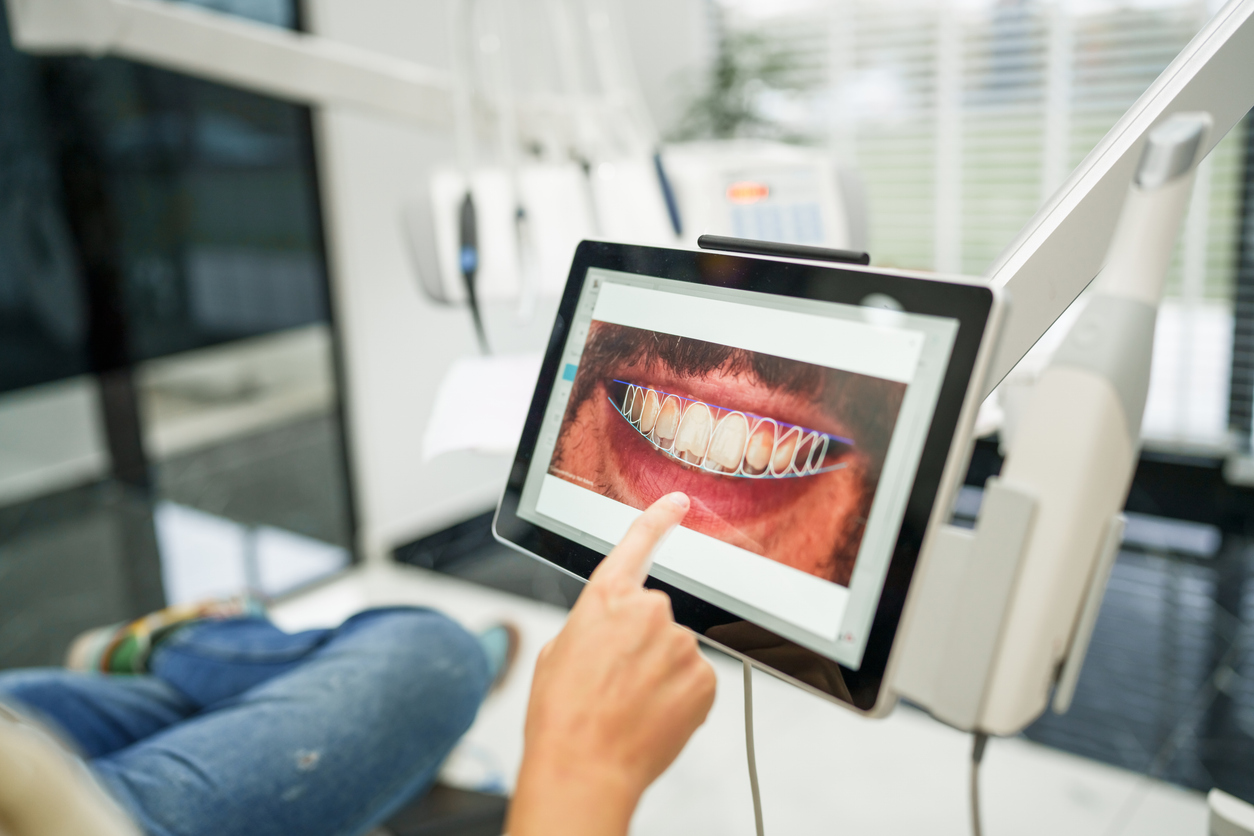
An implant replaces a tooth, but one person rarely handles every step. A surgeon places the fixture. A restorative dentist designs and delivers the crown. A laboratory technician builds the components that connect them. Most patients meet only one of these people. The others may be names on a referral slip or shipping label. Digital Implant Dentistry did not create this division of labor. It changed what the three parties work from. Instead of separate verbal instructions, stone models, and radiographs, they can use one shared record. Every participant can open, measure, and annotate it. Digital Implant Dentistry is often presented as a technology story. Its practical benefit for patients is coordination. This article follows a case between hands, explains who decides what, and shows where handoffs hold or slip.
Why One Implant Case Passes Through Three Sets of Hands in Digital Implant Dentistry
The phrase getting an implant describes one outcome, but it conceals a sequence. Clinicians may remove a failing tooth, graft the site, and place a fixture. The fixture then integrates before the team captures the healed site. Next, they design, fabricate, and seat the restoration. These tasks require different training. In many cases, a surgical specialist handles the first half. A general or restorative dentist handles the second, with laboratory support. The division exists because the skills differ. Digital Implant Dentistry does not reduce the number of hands involved. It increases the information they share. Everyone can open a three-dimensional plan before treatment begins. The team can define the restorative endpoint first and plan surgery backward from it. Each transfer still creates a possible gap. However, every participant sees the same case rather than a summary.
The Three Roles Behind Digital Implant Dentistry, Described Plainly
To a patient, the people involved can blur together. The surgeon evaluates bone and tissue. The surgeon may remove an unsalvageable tooth, add bone where needed, and place the fixture at a planned position, angle, and depth. The restorative dentist manages what patients see afterward. This includes deciding where the replacement tooth sits and how it meets opposing teeth. The restorative dentist also plans the gum-supporting shape and how the patient will clean it. The laboratory fabricates the abutment, framework, or crown. It must meet the fit tolerances implant components demand. In Digital Implant Dentistry, these roles overlap during planning, even if they remain separate during treatment. The surgeon joins the restorative discussion because anatomy limits the design. The restorative dentist joins the surgical discussion because the design guides useful fixture placement. Titles identify responsibility. They do not limit who contributes to the plan.
What the Restorative Dentist Decides Before the Surgeon Drills in Digital Implant Dentistry
The restorative dentist should settle several decisions before the surgeon creates an osteotomy. The team first determines where the replacement tooth sits in the arch. It also checks room between the ridge and opposing teeth. The restorative dentist decides whether the restoration uses screw retention or cement. The planned emergence profile and shade also affect fixture position. A fixture placed only for available bone may direct a screw channel through a cusp or facial surface. That can force a compromise at delivery. Digital Implant Dentistry places the proposed restoration in the plan first. It then shows the fixture beneath it. The restorative dentist defines the destination. The surgical plan determines whether anatomy supports it, requires grafting, or prevents it. Early planning turns a delivery-day disagreement into a planning conversation.
What the Surgeon Reports Back in Digital Implant Dentistry and Why It Changes the Plan
Information travels in both directions. Surgical findings can differ slightly from what the scan suggested. Those differences can affect the restorative plan. Bone may be softer or denser than expected. That can change the appropriate integration period. A thin facial plate may require grafting. Grafting can alter the tissue contour through which the crown emerges. Primary stability may support an immediate provisional. Or it may be too limited to justify one. Surgery fixes the fixture’s final position and angle. It also establishes platform depth relative to tissue and the connection type. In Digital Implant Dentistry, the surgeon records these facts in the case record. The record can include a capture of the placed fixture position and operative notes. The restorative dentist then designs against what exists, not only what the team planned. Older workflows often lost accuracy at this point.
What the Laboratory Needs From Both Clinicians in Digital Implant Dentistry
A technician builds components for a specific implant connection. Those components must meet tolerances measured in microns. Their quality depends on the information clinicians supply. The laboratory needs an accurate implant-position capture. It also needs the correct connection and platform, the opposing arch, and the bite. Clinicians should describe the planned contour and shade. They also need to state the available vertical room. Missing details can produce a part that fits the file rather than the mouth. In Digital Implant Dentistry, technicians often spot problems first. Designing the restoration can expose constraints the team did not see during planning. A technician may ask about screw-channel angulation, a contour reduction for cleanability, or an incomplete opposing-arch scan. Those questions do not slow the case. They solve design problems before they become appointment problems.
The Shared File as the Common Reference in Digital Implant Dentistry
A shared digital record removes the need to describe the case from memory. A verbal handoff compresses a three-dimensional situation into a few sentences. The recipient may reconstruct something different from what the sender meant. A written instruction creates the same problem more slowly. When every participant can open the same files, the case becomes an object they can measure. Digital Implant Dentistry depends more on that shared reference than on any single device. Team members measure available space instead of estimating it. They can review the same cross section to discuss angulation. Annotations remain in the record for the next person. They do not depend on a message traveling with the case. The common reference also gives later questions a specific source for answers.
How Implant Cases Were Coordinated Before Digital Implant Dentistry
Coordination once relied on physical objects and written descriptions. A surgeon used film and a stone model. The surgeon mounted the case on an articulator and sent paper instructions. A laboratory received an impression, poured it, and inferred intent from the prescription. Each transfer introduced a small loss. An impression could distort. A pour could expand. An articulator could sit slightly off. The phrase most favorable position could also mean different things to different readers. Experienced clinicians often compensated for these gaps. However, the process did not reveal a disagreement until the restoration was tried in. Digital Implant Dentistry largely removes this silent translation loss. It gives all three parties the same source material and lets them test assumptions before they act.
The Planning Conversation That Precedes a Surgical Date in Digital Implant Dentistry
A well-coordinated case includes a conversation before anyone schedules surgery. The participants review the scan together. They agree on where the restoration belongs. They assess whether bone supports a fixture in that position. They also decide whether grafting must come first. Next, they set the sequence. They decide whether extraction and placement occur at the same visit. They discuss whether a provisional restoration is realistic and how long healing should last before restorative work. They should also identify what could change the plan. Teams often skip this step. Digital Implant Dentistry supports the conversation from separate locations. Everyone can open the same plan on a screen. When the discussion happens first, the surgical appointment follows an established decision. Without it, surgery creates decisions that the restorative dentist and laboratory must work around.
Digital Implant Dentistry When One Clinician Holds Both Roles
Some cases stay within one office. The same clinician plans the restoration and places the fixture. The coordination problem remains, but it takes a different form. There is no referral letter or record transfer between systems. The team also avoids delays from reconciling two schedules. The clinician who decides where the crown belongs also positions the fixture. Intent therefore stays connected between those steps. Digital Implant Dentistry can also shorten the laboratory loop. The clinician can answer a question the same day and revise a design without a round trip. August de Oliveira DDS uses chairside CEREC and full laboratory workflows. The office can design and produce some restorations in-house. It can also send cases to a laboratory when appropriate. One clinician then holds responsibility for both halves. Written documentation of that clinician’s reasoning becomes even more important.
Referral Relationships Across Offices in Digital Implant Dentistry
When a case crosses offices, several points are better made explicit than assumed. The offices should agree on which one provides the surgical guide, which one orders and stocks the implant components, and what the healing interval will be. They should agree on who tells the patient when that interval ends, what records transfer and in what format, and who is responsible when a component arrives incorrect. They should also agree on how a complication is handled and which office the patient calls first. None of this is adversarial; it is ordinary project definition, invisible when a referral relationship is long standing and conspicuous when it is new. Digital Implant Dentistry resolves the record transfer question in most cases, because files move easily between offices, but it does not settle the responsibility questions on its own. Offices that work together regularly tend to maintain a standing agreement covering these points, so an individual case only needs the details specific to it.
Scheduling Two Offices Around One Patient in Digital Implant Dentistry
Patients experience coordination mainly as timing. A case run across two offices requires appointments to interlock: a consultation, a scan, a surgical visit, a healing period measured in months, a capture appointment once the site has healed, laboratory turnaround, and a delivery visit. Each of those has to fit two calendars rather than one, and a delay in any of them pushes everything behind it. Travel between offices, differing office hours, and the availability of a particular operatory all add friction that has nothing to do with clinical quality. Digital Implant Dentistry reduces part of this by removing appointments that existed only to transfer information, such as a visit made purely to take an impression that can now be captured alongside something else. It does not shorten the healing interval, which is biological rather than logistical. Offices that coordinate well tend to map the whole sequence at the start, so the patient knows which visits belong to which office and roughly when each one falls.
Questions a Patient Can Ask About Coordination in Digital Implant Dentistry
A patient is entitled to ask how a case will be run, and the answers should be straightforward. Reasonable questions include which clinician places the implant and which one restores it, whether those two have planned the case together before the surgical date, what the laboratory will be given to work from, how long the healing interval is expected to last, what the patient will wear in the meantime, and who to contact if something feels wrong between appointments. Another question worth asking is what the patient’s own record will contain afterward and whether a copy can be provided. Digital Implant Dentistry makes most of these questions easy to answer concretely, since the plan exists as something that can be shown on a screen rather than merely described. An office that cannot say clearly who is doing what, or that answers only in general terms, is revealing something about how its handoffs are managed. Clear answers early tend to predict a case that runs without surprises.
Arriving Mid Treatment From Another Provider and What Digital Implant Dentistry Can Recover
Patients sometimes transfer partway through implant treatment, after a move, after a referral relationship ends, or simply because a different office is a better fit. These cases begin with an inventory rather than a plan. The fixture is already in bone at a position nobody in the new office selected, and the first task is establishing what was placed, which connection it uses, when it was placed, and what the original restorative intent appears to have been. Records from the previous office answer this quickly when they are available, and most offices release them on request. When they are not available, a scan, a radiograph, and sometimes a component try in substitute for them. Digital Implant Dentistry helps here mainly because the information needed to identify and restore an existing fixture can be captured fresh rather than reconstructed from paperwork that no longer exists. The honest part of the conversation is that some constraints cannot be undone, and the new plan has to work within the position already present.
Continuity in Digital Implant Dentistry When a Participant Changes
Over the life of an implant the people around it change. A surgeon retires, a laboratory closes, a patient moves to a different general dentist, or an office replaces its systems. None of those events should make a restoration unserviceable, but any of them can if the only account of what was placed lived in one person’s memory or one office’s paper chart. The protection is documentation that travels: the implant brand and platform recorded in plain language, the surgical and restorative dates, the planning and design files retained, and a copy given to the patient to keep. Digital Implant Dentistry makes that documentation easy to produce and easy to send, which matters most years later, when a crown needs replacing and nobody involved in the original case is still reachable. Continuity depends less on any single participant remaining available and more on whether the case was recorded in a form the next participant can actually use.
Why Patients Choose August de Oliveira DDS for Digital Implant Dentistry
August de Oliveira DDS practices at 5400 Balboa Blvd #231 in Encino, California, and treats patients from Encino, Sherman Oaks, Van Nuys, Tarzana, Calabasas, Woodland Hills, Studio City, and Reseda. The office is open Monday through Thursday from 8 to 5, with Friday available by appointment. Dr. de Oliveira’s clinical focus is digital dentistry, and the practice runs both chairside CEREC workflows and full laboratory workflows. A restoration can therefore be designed and produced in the office when the case suits that route, or sent to a laboratory when outside fabrication is the better choice. For Digital Implant Dentistry, that combination matters mostly to coordination. Having both pathways available means the choice between them is made case by case rather than dictated by what the office happens to be equipped for. Patients referred elsewhere for the surgical portion return to a practice that already holds the planning record, and patients whose treatment runs entirely in the office deal with one team from planning through delivery.
Final Thoughts on Digital Implant Dentistry
Implant treatment is a sequence of decisions made by different people at different times, and the quality of the result depends on how well those decisions line up. Digital Implant Dentistry is valuable less because it renders bone attractively and more because it gives a surgeon, a restorative dentist, and a laboratory technician one record to measure against, disagree over, and return to months later. The technology does not replace the conversation between those three. It gives the conversation something concrete to be about, and it keeps a decision made in one office legible in another. Patients who understand that a case passes through several hands are better positioned to ask the questions that keep those hands aligned. This article is general information about how implant cases are coordinated and is not a treatment recommendation for any individual situation. Anyone considering implant treatment, or carrying an implant placed elsewhere, can contact August de Oliveira DDS in Encino to schedule a consultation and review the specifics of the case.