Impacted or poorly positioned teeth, including some before orthodontic treatment.
In most cases, Dr. De Oliveira will first discuss alternatives to extraction and, when removal is the right choice, how best to replace the tooth.
The Procedure
Gentle, Comfortable Removal
Before your extraction, Dr. De Oliveira fully numbs the tooth, jawbone, and surrounding gums with local anesthetic. During the procedure you’ll feel pressure, from the gentle rocking that widens the socket, but not pain, because the anesthetic blocks the nerves that transmit pain while leaving those that sense pressure. If you ever feel discomfort, just let us know and we’ll adjust right away.
Occasionally a tooth is firmly anchored or has a curved root. In these cases, Dr. De Oliveira simply divides the tooth into smaller sections and removes them one at a time, a common, routine step.
Caring for Your Smile
After Your Extraction
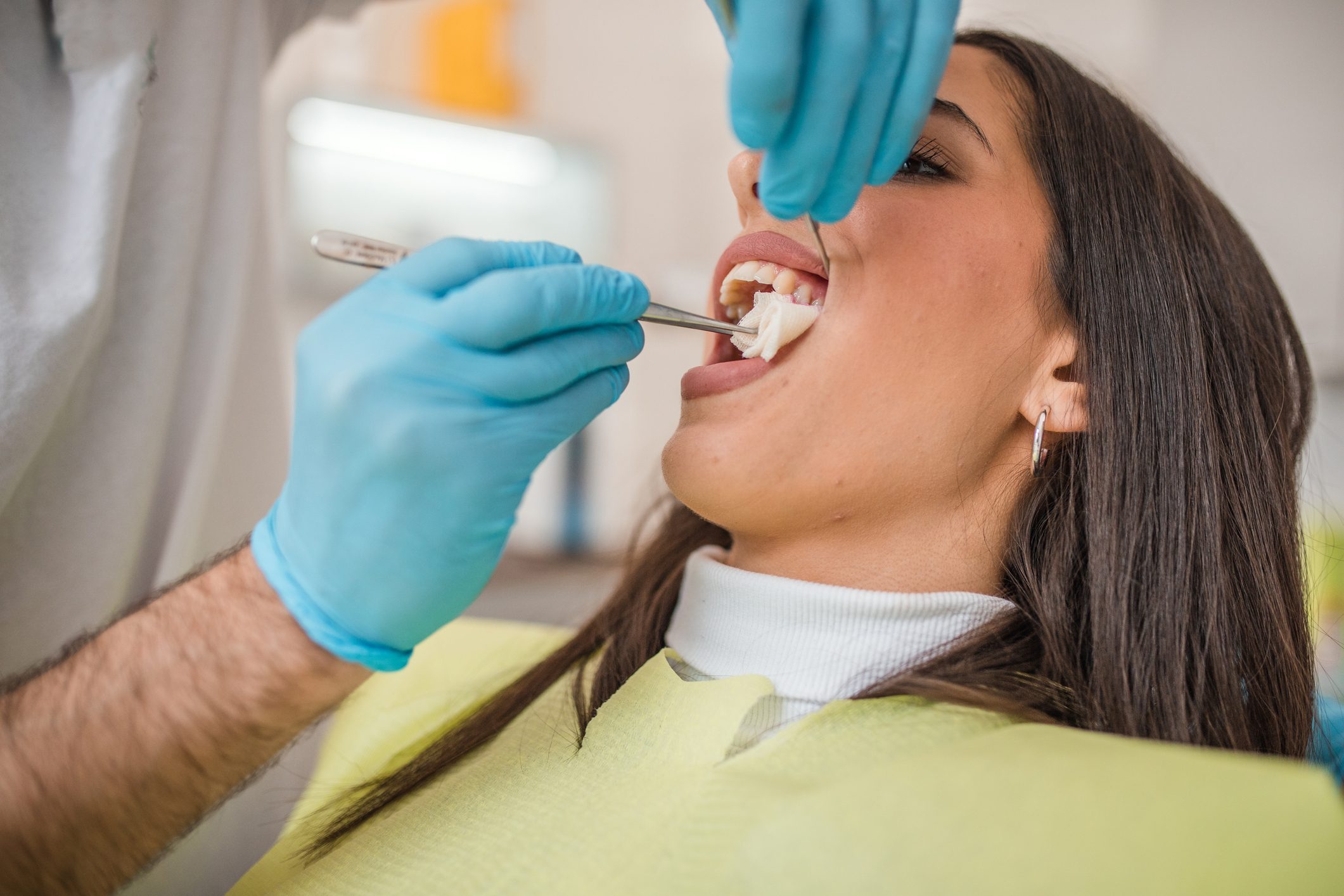
The first hour: Bite firmly on the gauze pad for 30–45 minutes to help a blood clot form. If bleeding continues, replace it with a fresh pad and repeat. That clot is what protects the healing site.
Do
Don't
Apply an ice pack (or a bag of frozen peas) to limit swelling, which usually eases after 48 hours.
Rinse vigorously, use straws, smoke, or drink alcohol, as each can dislodge the blood clot.
Take any pain medication or antibiotics exactly as prescribed, and finish all antibiotics.
Brush the teeth immediately next to the extraction site.
Drink plenty of fluids and eat soft, nutritious foods.
Do vigorous exercise for the first 24 hours.
Gently resume brushing and flossing after 24 hours, avoiding the extraction site at first.
⚠️ Call us right away if you experience heavy bleeding, severe pain, swelling lasting 2–3 days, or any reaction to your medication.
The Next Step
Don't Leave a Gap
A missing tooth can lead to shifting teeth, bite changes, and jaw-joint problems over time. The good news: you have excellent replacement options. As a nationally recognized implant expert, Dr. De Oliveira can replace an extracted tooth with a natural-looking implant, bridge, or denture—and will help you choose what’s right for you.
Whether your tooth can be saved or needs to be removed, Dr. De Oliveira will guide you through every option with comfort and care. Schedule a visit today.