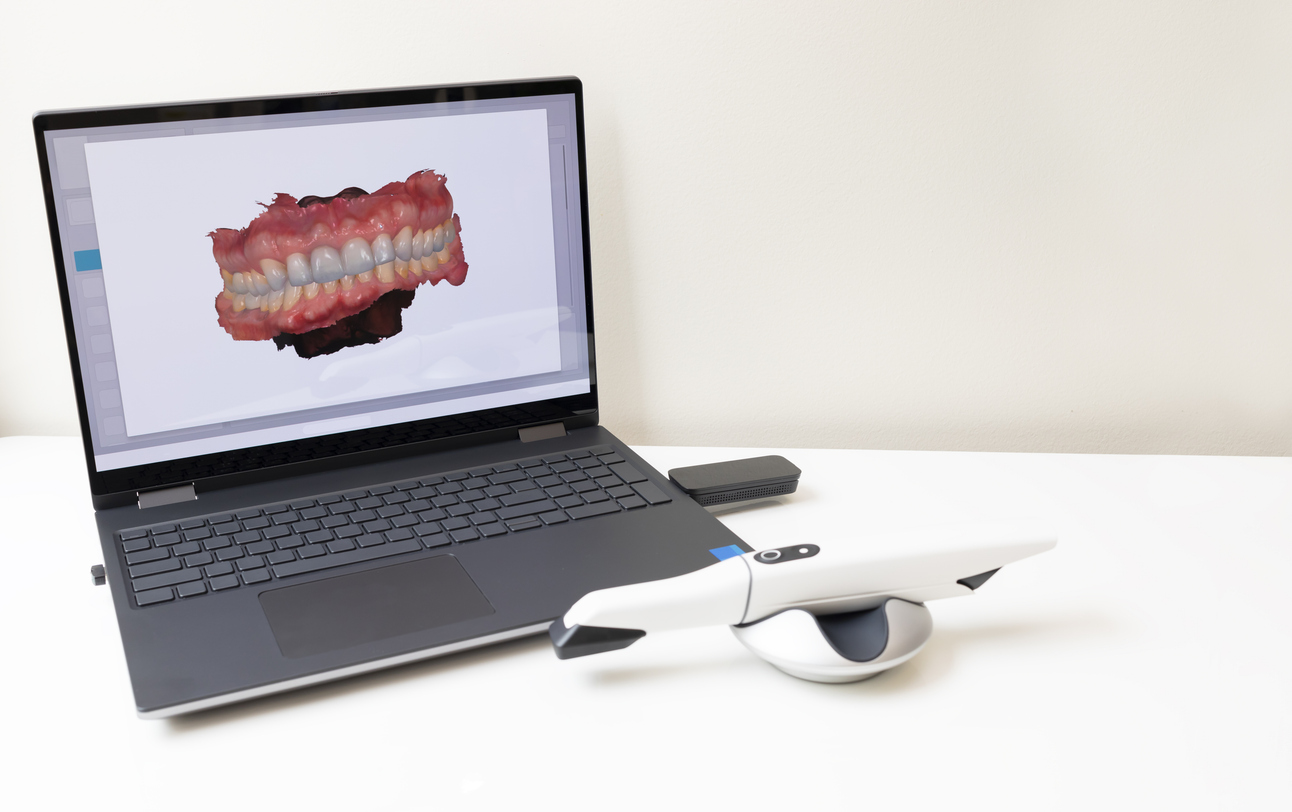
A patient who agrees to an implant usually believes the decision was made in conversation, somewhere between a failing tooth and a surgical date. In practice the decision is made later, in front of a screen. Digital Implant Dentistry begins with a scan and a planning session, and that session is where the case is actually tested. The bone is measured, a proposed tooth is placed where it belongs, and the distance between what the patient wants and what the anatomy allows becomes visible. Sometimes the plan confirms a simple case. Sometimes it adds a step, changes the order of treatment, or raises a question about a neighboring tooth that nobody had been discussing. Occasionally it shows that the office should not proceed at all. Treating Digital Implant Dentistry planning as paperwork on the way to surgery misses the point of it entirely. What follows describes what the planning stage in Digital Implant Dentistry reveals, and what decision tends to follow each finding.
Why the Planning Stage in Digital Implant Dentistry Is a Decision Point and Not a Formality
The planning appointment is easy to mistake for an administrative step, a scan taken so that a surgical date can be set. It functions differently. Planning in Digital Implant Dentistry produces a specific, testable proposal: a fixture of a particular size, in a particular position and angle, supporting a restoration of a particular shape. Each of those specifics can fail the test. The bone may not hold a fixture of that size in that place. The restoration may not fit the space available. The site may need preparation that takes months. Because the proposal is explicit rather than general, the planning session becomes the first point at which the case can be revised or rejected on evidence rather than impression. A plan that survives review becomes a surgical date. A plan that does not becomes a different plan, or a conversation about alternatives. The decision gate sits here, before anesthesia, before a commitment is made, and before anything in the mouth is irreversible.
What the Scan Shows About Bone Volume That an Examination Alone Cannot in Digital Implant Dentistry
An examination tells a clinician a great deal about the visible mouth and comparatively little about what lies beneath the gum. Ridge width can be estimated by feel, and the estimate is often wrong, because a ridge that looks broad at the surface can narrow sharply below it. Height is harder still to judge, since the floor of a sinus or the top of a nerve canal gives no outward sign of where it sits. Digital Implant Dentistry replaces that estimate with a volume that can be sliced and viewed from any direction. A cross section taken through the proposed site shows the ridge in profile: whether the outer plate is thick or thin, whether a concavity sits beneath the crest, whether the usable bone lies directly under the intended tooth position or off to one side. Those are the facts that decide whether a fixture fits, and none of them are reliably available from looking and probing.
How Proximity to Anatomical Structures Narrows the Options in Digital Implant Dentistry
Bone volume alone does not settle the question, because some of the bone present cannot be used. Nerve canals run through the lower jaw, sinus cavities sit above the upper back teeth, and the roots of adjacent teeth occupy space that is not always where it appears to be from the surface. Planning in Digital Implant Dentistry locates those structures in relation to the proposed fixture and shows how much working room remains once a safe margin is respected. The effect is usually to narrow choices rather than close them. A shorter fixture may be indicated, or a different diameter, or an angle that keeps a comfortable distance while still supporting the restoration. Sometimes the usable bone sits far enough from the structure that nothing about the plan changes. Sometimes the margin is thin enough that the case becomes a sinus procedure or a nerve repositioning discussion rather than a routine placement. Either way, the constraint is identified before a surgical tray is opened.
The Finding That Moves a Case From Straightforward to Staged in Digital Implant Dentistry
Many cases look simple until one particular finding appears. A tooth scheduled for removal turns out to have lost much of the bone along its outer surface, so the socket left behind will not support placement at the same visit. A site that healed years ago has collapsed inward, leaving a ridge too narrow for a fixture of useful diameter. An old infection at the end of a root has hollowed out the area intended for the implant. Digital Implant Dentistry does not create these problems, but it finds them before surgery rather than during it, which is the difference between a planned sequence and an improvised one. The practical consequence is staging. Instead of one appointment that accomplishes everything, the case becomes two or three appointments separated by healing time. Patients generally receive that news better when it arrives during planning, with the reason visible on screen, than when it arrives midway through a procedure that had been described as simpler.
The Grafting Requirement That Appears on Screen in Digital Implant Dentistry
Grafting is often discussed as something a surgeon discovers after opening a site. Planning moves most of that discovery earlier. When a proposed fixture is positioned inside the scan, the planning view shows where it would sit relative to the bone that actually exists, and a deficiency becomes visually obvious: a fixture whose outer surface would lie outside the ridge, or whose tip would reach the floor of a sinus. Digital Implant Dentistry turns the grafting question from a judgment made under a flap into a plan drawn in advance, with the extent and location of the missing bone identified. That changes the conversation. Instead of being told that grafting might become necessary, a patient is told what is missing, where it is missing, and roughly how long the site will need before a fixture can be placed. It also lets the office schedule and sequence the case honestly from the start, rather than converting a surgical appointment into something larger than described.
When a Neighboring Tooth Changes the Plan for the Whole Area in Digital Implant Dentistry
A missing tooth is rarely the only concern in its neighborhood. The scan captures the teeth on either side of the gap as well as the gap itself, and those neighbors sometimes carry findings of their own: a root with substantial bone loss around it, a large old restoration with decay beneath the margin, a fracture line, a root that has resorbed. Planning in Digital Implant Dentistry forces a question that a narrower view would postpone. If a neighboring tooth is likely to fail within a few years, placing a single implant beside it may commit the area to a second surgery and a second healing period later. The alternative may be to address the whole span at once, or to delay implant work until the neighbor’s outlook is clearer. Neither answer is automatically correct. What matters is that the question gets asked while the plan is still editable, rather than after a fixture has been placed in a position that assumed a stable neighbor.
Periodontal and Restorative Findings Settled Before Digital Implant Dentistry Surgery Is Scheduled
Some findings do not change where a fixture goes but do change when it goes in. Inflammation in the gum tissue, untreated decay, a loose restoration, or bone loss around other teeth all describe conditions that affect how well an implant site heals and how predictable the result will be. Digital Implant Dentistry planning produces a view of the whole arch rather than a single site, which makes these issues difficult to overlook. The usual outcome is sequencing: the office treats what needs treating, confirms the tissue has responded, and only then schedules surgery. Patients sometimes experience this as a delay imposed for no visible reason, particularly when the problem areas are not painful. Explaining the connection helps, and the plan on screen makes the explanation concrete, because the bone that supports the neighboring teeth is the same bone that must hold a new fixture. Scheduling surgery into an unresolved mouth produces a result that is harder to maintain afterward.
When the Plan Shows There Is Not Enough Room in Digital Implant Dentistry
A gap that has been open for years is rarely the size it was on the day the tooth came out. Neighboring teeth drift and tip into the space, roots converge beneath the surface even when the crowns still look separated, and the ridge itself narrows over time. Planning in Digital Implant Dentistry measures the space that actually exists rather than the space that appears to exist, and sometimes the measurement is unwelcome. There may not be room between the adjacent roots for a fixture of adequate diameter, or room for a restoration shaped like the tooth the patient remembers. The options that follow are concrete. Orthodontic movement can reopen the space before implant work begins. The restoration can be designed narrower than the original tooth, a cosmetic compromise a patient should agree to in advance rather than receive as a surprise. Or the area can be restored a different way. The common failure is discovering the constraint after a fixture is already placed.
Seeing the Proposed Result Before Agreeing to It in Digital Implant Dentistry
Most of what a planning session produces is technical, but one part of it speaks directly to a patient: a picture of the intended outcome. The proposed restoration can be shown in position, in the context of the surrounding teeth, before anything has been done. Digital Implant Dentistry makes that preview ordinary rather than exceptional, and it changes the quality of the consent conversation. A patient who has seen where the new tooth will sit, how it will meet the gum line, and how it will compare in width to its neighbors can raise objections that would otherwise surface at delivery. The preview is a proposal and not a guarantee, since tissue healing and final shade work carry their own variability. Its value is that it gives a patient something specific to react to. Agreement reached in front of an image tends to hold better than agreement reached in front of a description, because both parties are looking at the same thing.
The Alternatives That Planning Surfaces in Digital Implant Dentistry, Including No Treatment
A planning session that only ever produces implants is not really a planning session. Part of the value of the exercise is that it makes alternatives visible at the same time. If the neighboring teeth already carry large restorations, bridgework may accomplish the same goal without surgery or healing time. If the missing tooth sits far back and the patient chews comfortably without it, leaving the space alone is a legitimate option with consequences worth stating plainly, including gradual drift of the surrounding teeth. A removable appliance remains reasonable in some situations. Digital Implant Dentistry supplies the information that lets these options be compared honestly, because the same scan that supports an implant plan also shows the condition of the teeth a bridge would have to rely on. Presenting alternatives is not a lack of confidence in the implant. It is what allows a patient to choose rather than merely consent, and a patient who chose tends to follow through on maintenance.
The Honest Decline in Digital Implant Dentistry and What Follows It
Occasionally the plan supports a conclusion nobody wanted. The anatomy may leave too little usable bone for a result the office would stand behind, even after grafting. The case may call for surgical experience beyond what the practice offers. Health as reported to the office may argue for a different approach, or for coordination with a physician before anything proceeds. Digital Implant Dentistry makes a decline easier to deliver and easier to accept, because the reasoning can be shown rather than asserted. A patient who looks at the cross section understands why the answer is no in a way that a verbal explanation rarely achieves. The decline is usually not an ending. It may mean a referral to a specialist who takes on cases of that difficulty, a different restorative approach entirely, or a recommendation to address other matters first and revisit the question later. An office that declines a case it should not take is protecting a result, not avoiding work.
How Staging Is Decided in Digital Implant Dentistry and Which Step Happens When
Once the findings are known, the remaining question is order. Extraction, grafting, healing, placement, integration, and restoration are distinct steps, and the plan determines which of them share an appointment and which are separated by months. A sound site with adequate bone may allow extraction and placement at one visit. A site with a damaged outer wall usually calls for grafting first and placement later. Soft tissue work may be added before or after placement depending on what the area needs. Digital Implant Dentistry supports these choices by showing what exists now rather than what is hoped for, and the resulting schedule tends to be more accurate because of it. Patients benefit from hearing the whole sequence at once, including the approximate waiting periods and what will be worn or not worn in the interim. A sequence described completely at the outset feels like a plan. The same sequence revealed one step at a time feels like a series of complications.
What a Patient Takes Away From a Digital Implant Dentistry Planning Appointment
A planning appointment should leave a patient with more than an appointment card. The useful takeaways are specific: what the scan showed about the site, whether grafting is part of the plan, how many surgical visits are expected, roughly how long the whole sequence will run, what will fill the space during healing, and which findings elsewhere in the mouth need attention first. A patient who leaves able to describe the plan to a family member has received it properly. Digital Implant Dentistry supports that handover because the images can be reviewed together and the proposed result can be seen, which makes the discussion concrete instead of abstract. Patients should also leave knowing what would change the plan. Bone that turns out softer than expected, a tooth that does not survive removal intact, or tissue that heals more slowly than anticipated are ordinary variations, and hearing about them in advance keeps a normal adjustment from feeling like a failure.
Questions Worth Asking While the Digital Implant Dentistry Plan Is Still on Screen
The planning session is the moment when questions are cheapest to answer, because the file is open and the answer can be pointed at. Reasonable questions include what the scan showed about the amount and quality of bone at the site, whether grafting is needed and why, how close the proposed fixture sits to any nearby structure, what the plan assumes about the neighboring teeth, and how the finished restoration will be cleaned day to day. Asking what the alternatives are, and what would happen if nothing were done at all, is equally fair. Digital Implant Dentistry gives an office the means to answer each of those with an image rather than a reassurance, and an office that cannot or will not show its reasoning is worth a second thought. Patients are not expected to evaluate an implant plan on technical grounds. They are entitled to understand why each step exists, and a planning session is where that understanding is built.
Why Patients Choose August de Oliveira DDS for Digital Implant Dentistry
August de Oliveira DDS practices at 5400 Balboa Blvd #231 in Encino, CA 91316, serving patients from Encino, Sherman Oaks, Van Nuys, Tarzana, Calabasas, Woodland Hills, Studio City, and Reseda. Office hours run Monday through Thursday from 8 to 5, with Friday available by appointment. Dr. de Oliveira’s clinical focus is digital dentistry, and the office runs both chairside CEREC workflows and full laboratory workflows, so a restoration can be designed and produced in the office or sent out when a case calls for outside fabrication. For Digital Implant Dentistry, that combination matters at the planning stage, because the restorative endpoint can be considered alongside the surgical plan rather than after it. Patients who come to the office for implant planning are shown what the scan reveals and what each finding means for the sequence ahead, including the findings that complicate a case and the findings that argue against proceeding. The planning appointment is treated as a decision point, because that is what it is.
Final Thoughts on Digital Implant Dentistry
The scanning and planning phase is where an implant case is genuinely decided. It is where bone volume gets measured instead of guessed, where nearby structures set limits, where grafting requirements appear, where a neighboring tooth can reshape the plan for a whole area, and where a proposed result can be seen and either agreed to or rejected. Digital Implant Dentistry has made that stage detailed enough to carry real weight, and a practice that treats it as a formality wastes the most useful appointment in the sequence. Patients considering tooth replacement are better served by asking what the planning session showed than by asking how long surgery takes. This article is general information and is not a diagnosis or a treatment recommendation; any individual plan depends on an examination and on health as reported to the office. Patients in Encino and the surrounding communities who want to know what their own planning stage would reveal are invited to contact August de Oliveira DDS to schedule a consultation.