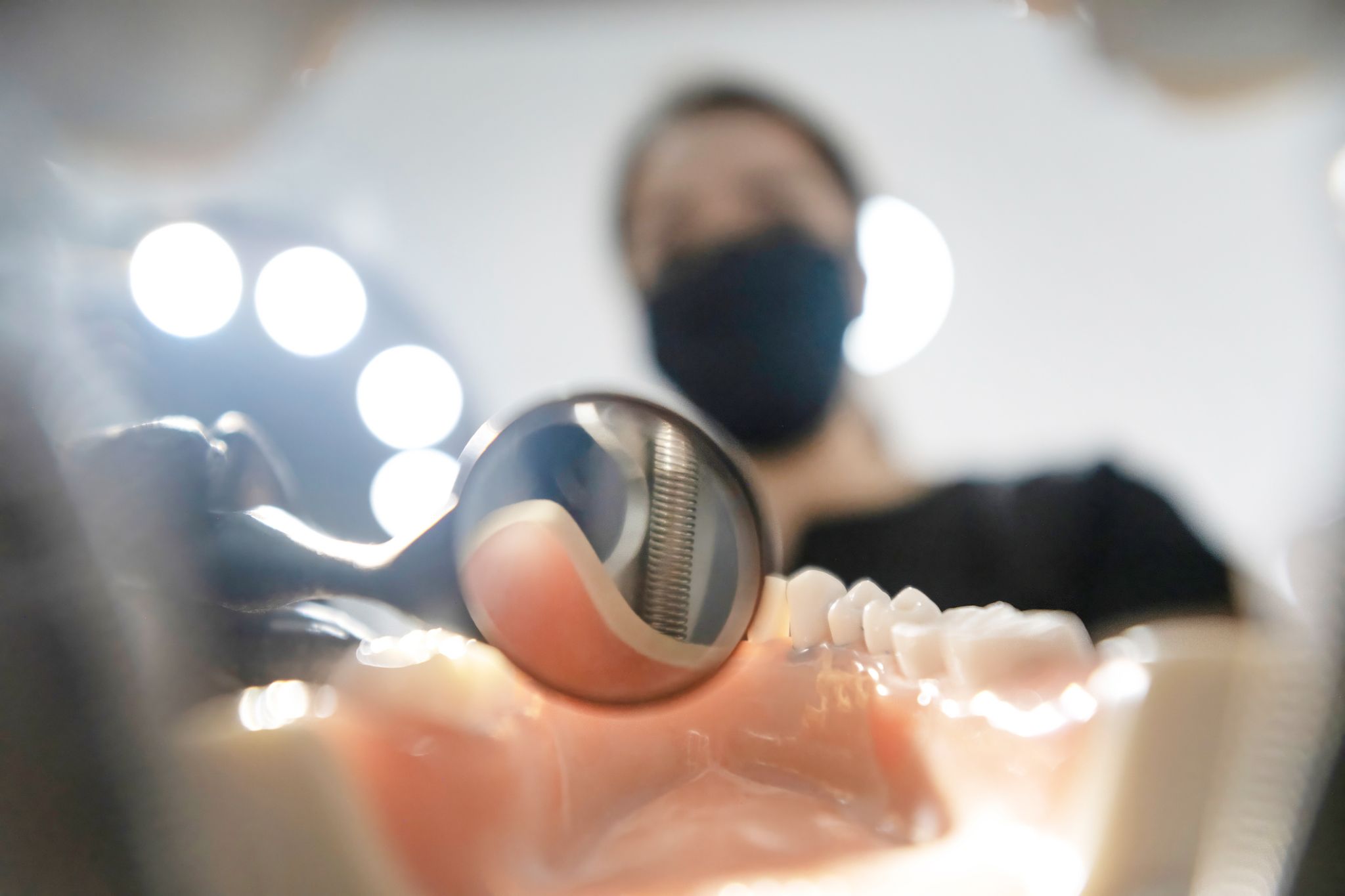
Two patients arrive in the same month with a similar problem. Each has lost a lower first molar. Their scans show similar bone levels. The neighboring teeth are sound, and neither medical history rules out treatment. On paper, the cases look interchangeable. By year-end, one patient has an integrated titanium implant post and restoration. The other has a dental bridge. Neither made a mistake. Conversations about Dental Implants Encino often assume that one clinical picture has one correct answer. They may also suggest that a patient who chooses differently received poor advice. Yet scans cannot show every important variable. A working year, the forces on a tooth, and prior dental experiences can shape the decision. These factors often settle a question about Dental Implants Encino. An examination record cannot predict them. This article explains how two reasonable people can receive the same information about Dental Implants Encino and still choose differently.
Why the Same Clinical Picture Does Not Produce the Same Decision About Dental Implants Encino
A diagnosis is a finding that two people can share. A decision is a judgment shaped by details no radiograph can hold. Patients with identical measurements may qualify for a dental implant procedure. They may also qualify for a fixed bridge or removable partial denture. The decision begins after that clinical finding. Patients must consider how their year is structured, what they ask the tooth to do, and what they expect from dental work. They should also consider what the rest of the mouth may need over the next decade. These details affect which choice a patient will value years later. Dental Implants Encino does not present one universally right answer. Careful restorative dentistry often offers several defensible choices for different lives.
How the Chewing Demands of a Back Tooth Change the Case for Dental Implants Encino
The physical job a missing tooth was doing differs enormously between positions, and so does the cost of replacing it imperfectly. A second molar does heavy, repetitive work and is rarely seen. A lateral incisor does comparatively little work and is seen constantly. Two patients with the same gap can still face different demands, because one eats in a way that loads the area hard and the other does not. A diet that runs dense and fibrous stresses a replacement differently than one that runs soft. Dental Implants Encino is often weighed first on appearance, when function is frequently the variable doing more work in the decision. A single tooth implant transfers force into bone in a way that resembles a natural root, which matters more where force is high. Where the position is visible and the load is light, the conversation shifts toward Encino cosmetic dentistry and how closely an implant crown or a bridge pontic can be matched to what sits beside it. Both are legitimate priorities, and two patients considering Dental Implants Encino rarely rank them in the same order.
How Much Treatment Time a Patient Can Give in a Year to Dental Implants Encino
Implant treatment does not require many chair hours, but it takes place over time. A flexible patient can attend visits on short notice. Another patient may need to arrange every visit around other people’s schedules. Dental Implants Encino usually includes a consultation, placement appointment, healing period, and restorative visits. The healing period can last several months. Time away from work is often modest. Still, the commitment can stretch across much of a calendar year. A dental bridge usually concentrates treatment into a few weeks. Some patients prefer four visits over ten months. Others prefer six visits over six weeks. Neither preference is impatient or hasty. The best plan fits the patient’s actual year. Clinicians make better recommendations when they ask about that schedule.
The Patient Who Wants the Fewest Appointments and the One Who Wants the Most Conservative Result in Dental Implants Encino
Some patients optimize for finishing. Others optimize for preserving what is still healthy. Those two goals usually point the same way, and occasionally they do not. The most conservative option for a single gap flanked by untouched teeth is generally implant treatment, because it replaces the missing root without reducing the enamel on either side. The faster option is often a bridge, because implant placement is followed by an osseointegration period during which nothing can be loaded. A patient who wants the fewest appointments may find the bridge appealing even knowing two sound teeth get prepared. A patient who wants the neighbors left alone will accept a longer road to get there. Dental Implants Encino sits at the conservative end of that trade and the slower end of it at once, which is exactly why reasonable people split. The useful framing is not speed against quality, since either option can be done well or badly. It is speed against how much untouched tooth structure remains in twenty years, and Dental Implants Encino answers that second question more directly than the first.
When a Neighboring Tooth Tips the Decision Toward or Away From Dental Implants Encino
The state of the teeth on either side of a gap can settle the question before anything else does. If both neighbors already carry large restorations, crowns, or failing margins, they may need full coverage regardless. In that situation a dental bridge covers three problems with one piece of work, and the argument against preparing sound teeth disappears, because the teeth were not sound. A different patient with the same gap has neighbors that are intact, unrestored, and expected to stay that way. Reducing them to carry a bridge spends healthy structure that would otherwise never be touched, and Dental Implants Encino becomes the option that leaves the rest of the mouth as it is. This single variable explains much of the divergence between two otherwise matched cases. It is also the one patients are least likely to raise, since the discussion feels as though it should be about the empty space. An implant consultation that looks carefully at the neighbors, rather than only at the site, tends to produce a clearer recommendation about Dental Implants Encino than one that does not.
The Patient Who Has Lost Confidence in Removable Appliances and Asks About Dental Implants Encino
A patient who has worn a removable partial denture and disliked it brings something to the consultation no examination produces. The experience is specific: the appliance moved during meals, or felt bulky against the tongue, or had to come out somewhere inconvenient. That history changes the weighting of every option that follows. Such a patient will often rule out anything removable before the alternatives are fully described, and the exclusion is reasonable rather than emotional, since it rests on direct evidence of what did not work. Dental Implants Encino appeals strongly here, because a fixed replacement does not come out, does not need managing in public, and does not rest on the gums. A patient with no such history weighs the same removable option on its merits and may find it perfectly acceptable for a single space. The two patients receive an identical list of choices and read it completely differently. Lived experience is data, and a clinician discussing Dental Implants Encino who asks what a patient has already tried learns more from one question than a scan provides across several images.
How Age and Expected Service Life Enter the Reasoning on Dental Implants Encino
Age enters this conversation more often than it should and decides it less often than patients expect. A younger patient has more years ahead in which any restoration will be tested, which argues both for the longest-lasting option and for the one easiest to revise later. An older patient may have fewer years of service to plan for, but more interest in avoiding repeated treatment. Those pull in different directions, and neither resolves cleanly into a rule. Dental Implants Encino is sometimes described as a choice for younger patients, which does not hold up, since general health, healing capacity, and what the rest of the mouth requires matter more than a birth year. What age does legitimately affect is how a patient reasons about the future. Someone in the fourth decade thinking about jawbone preservation across several decades reaches a different conclusion than someone weighing the next ten years. Both reason correctly from where each stands. Age belongs in a discussion of Dental Implants Encino as context rather than as a criterion, and a careful clinician keeps it in that role.
Sequencing Other Dental Work Around Dental Implants Encino
Few patients arrive with one isolated problem. A missing tooth often sits alongside a cracked molar awaiting a crown, a failing filling, or an interest in alignment later. Where other work is coming, sequence matters, because some steps constrain others. Moving teeth after a fixture is placed is harder than moving them before, since an integrated implant does not shift. A patient planning orthodontic treatment is usually better served by finishing that first, which can push Dental Implants Encino a year down the calendar and make an interim solution sensible in the meantime. A patient with no other work pending has no such constraint and can begin whenever the site is ready. Two patients with identical gaps therefore end up on different timelines, and sometimes on different treatments, because one is sequencing around a larger plan. This is where a broader view of implant dentistry helps. A decision about Dental Implants Encino made in isolation can turn out to conflict with something a patient wanted a year later, which is avoidable by asking early what else is likely to be wanted.
Tolerance for Staged Treatment and Healing Intervals in Dental Implants Encino
Some patients are comfortable with an unfinished state and some are not, and the difference is more consequential than it sounds. Implant treatment includes intervals during which nothing visible happens. After extraction, a site may need weeks to settle. After bone grafting, months. After placement, more time still while osseointegration completes. For one patient, those intervals are periods when no appointment is scheduled. For another, knowing a space remains unfinished is a low-grade preoccupation lasting the whole time. That is not irrational and should not be dismissed. A patient who finds staged treatment genuinely difficult may choose a faster route and be happier with the result even where the slower route offered advantages. Dental Implants Encino requires a tolerance for waiting that most patients have and some do not. Asking how a patient feels about several months of intermediate status produces a more honest answer than assuming everyone manages it. Provisional restorations can close the gap meanwhile, and for many patients that resolves the concern around Dental Implants Encino entirely, which is worth raising before the concern becomes a reason to decline.
What Frequent Work Travel Changes About Dental Implants Encino
A patient who travels two weeks each month follows a different calendar from a patient who stays local. Travel affects more than scheduling. It affects access to care if something needs attention between appointments. It can also delay care for a loosened provisional or healing check. Dental Implants Encino can work well for frequent travelers. However, the plan should account for time away. The office can group appointments and align healing intervals with known trips. Clinicians can also schedule surgery before quieter recovery days. Local patients may not need that structure. Without adjustments, the same treatment plan can feel smooth for one patient and frustrating for another. Heavy travel can reasonably lead a patient to choose a shorter course of treatment. That is a scheduling decision, not a clinical compromise.
How Family and Caregiving Responsibilities Shape the Calendar for Dental Implants Encino
Responsibility for other people reshapes a calendar in ways easy to underestimate. A patient caring for a parent, or managing the schedules of young children, often has less discretionary time than a patient with a demanding job, because the obligations are less predictable and harder to hand off. That has practical consequences. A morning appointment may be impossible. A recovery day may not exist. A plan assuming a patient can rest quietly after a surgical visit may be describing a day that patient does not have. Dental Implants Encino involves at least one appointment after which taking the afternoon easy is advisable, and arranging that is itself a significant piece of work for some patients. None of this makes implant treatment unsuitable. It means the plan needs building around real constraints, with visits placed where coverage exists and recovery placed where help is available. A patient without those obligations faces none of it and may reasonably wonder why anyone hesitates. Identical treatment asks different amounts of two different lives, and that difference belongs in a discussion of Dental Implants Encino.
What Previous Dental Work Teaches a Patient Considering Dental Implants Encino
Patients carry a history with dentistry that colors every new proposal. A patient whose previous crown lasted twenty years without trouble approaches a recommendation with a baseline of trust. A patient whose last significant treatment failed early, needed redoing, or was uncomfortable throughout approaches the same recommendation with caution that is fully earned. Neither stance is irrational and neither is easily argued away, because both generalize from real evidence. Dental Implants Encino is affected by this in a particular way, since implant treatment asks for confidence over a longer horizon than most procedures do. A patient with a good history will accept a staged plan readily. A patient with a poor history often wants to know what happens if it does not work, and deserves a direct answer rather than reassurance. The second patient sometimes chooses a simpler option specifically because the consequences of failure are easier to picture and to undo. That is a reasonable way to decide. A clinician who understands that caution about Dental Implants Encino comes from experience rather than from misinformation will have a more productive conversation.
How a Clinician Presents Options for Dental Implants Encino Without Steering
The way options are described shapes which one a patient picks, whether or not that is intended. An option named first, described at greater length, or given the warmer adjective will be heard as the recommendation. Presenting choices without steering takes deliberate effort. It means describing each tooth replacement option on the same terms: what it involves, how long it takes, what it alters, what maintenance it needs, and how it tends to behave over time. It means naming the drawbacks of the option the clinician would personally choose. It also means stating which option is preferred and why, because withholding a view is its own kind of unhelpfulness. Patients asking about Dental Implants Encino usually want to know what an experienced clinician would do, and a flat recitation of alternatives does not answer that. The balance worth striking is a clear recommendation with its reasoning exposed, so the reasoning can be disputed. A patient told that Dental Implants Encino suits the case because the neighboring teeth are untouched can weigh whether that reason matters personally. A patient told only that it is best cannot.
Why the Record Should Show Which Option Was Chosen in Dental Implants Encino and Why
A chart note recording only the treatment performed loses the most useful part of the decision. Years later, someone reviewing the file sees that a bridge was placed and cannot tell whether an implant was discussed, declined, ruled out, or never raised. That gap matters when circumstances change. A patient who chose a bridge because of a schedule that no longer applies may revisit the question, and a record showing the patient was a suitable dental implant candidate at the time makes the second conversation far shorter. Documentation of Dental Implants Encino decisions should capture the alternatives presented, the reason the chosen option was chosen, and anything the patient identified as the deciding factor. This is not defensive record keeping. It is continuity, and it protects patients more than it protects the office. It also makes an implant restoration or a bridge easier to maintain, since whoever sees the patient next understands the logic that produced it. A file explaining why Dental Implants Encino was chosen, or set aside, is worth more five years on than one listing procedure codes alone.
Why Patients Choose August de Oliveira DDS for Dental Implants Encino
August de Oliveira DDS practices at 5400 Balboa Blvd #231, Encino, CA 91316, and sees patients Monday through Thursday from 8 to 5, with Friday available by appointment. The office serves Encino, Sherman Oaks, Van Nuys, Tarzana, Calabasas, Woodland Hills, Studio City, and Reseda, a wide range of schedules among patients seeking San Fernando Valley dental care. Dr. de Oliveira’s focus is digital dentistry, and the practice runs both chairside CEREC and full laboratory workflows, so the restorative pathway for a case can be chosen on its merits rather than on whichever method the office is equipped for. That bears on the subject of this article, since a decision about Dental Implants Encino should not be shaped by what sits in the operatory. An option is also easier to weigh when it can be seen rather than summarized, and a planned implant position can be shown on screen while the alternatives are still open. Choosing an implant dentist in Encino is partly a question of whether the non-clinical variables get asked about at all, and questions about schedule, travel, caregiving, and other planned treatment are welcome at the first conversation about Dental Implants Encino.
Final Thoughts on Dental Implants Encino
Two patients can be given the same findings, the same options, and the same honest explanation, and still walk out having decided differently, with both decisions defensible. The clinical examination narrows the field. What finishes the job is everything the examination does not measure: the demands placed on a particular tooth, the realistic shape of a year, a tolerance for waiting, the condition of the teeth next door, and what a patient already knows from previous dental work. A conversation about Dental Implants Encino that covers only the first of those is incomplete, and a conversation that covers all of them usually arrives somewhere the patient keeps believing in later. This article is general information and is not a treatment recommendation, and only an examination can determine what a specific case needs. Patients in Encino and the surrounding communities who want the options for Dental Implants Encino laid out on even terms, with the reasoning behind each made plain, are invited to contact the office of August de Oliveira DDS to schedule a consultation.