Most people carry a simple assumption about teeth: a tooth in trouble will hurt, and a tooth that feels fine is fine. That assumption is wrong often enough to matter. Many teeth that require endodontic therapy are found during a routine examination, in patients who reported nothing at all. The need for a root canal Encino patients did not expect is frequently discovered on a radiograph taken for another reason, or during pulp tests run because one tooth looked slightly darker than its neighbor. This article is about diagnosis rather than treatment. It explains what the dental pulp is, why nerve tissue can die without producing a signal, which histories quietly set the stage years in advance, and which specific tests a dentist performs to reach a root canal Encino conclusion. Understanding how the root canal Encino diagnosis is actually made removes most of the surprise from hearing it.
What the Dental Pulp Is and Why a Root Canal Encino Diagnosis Starts There
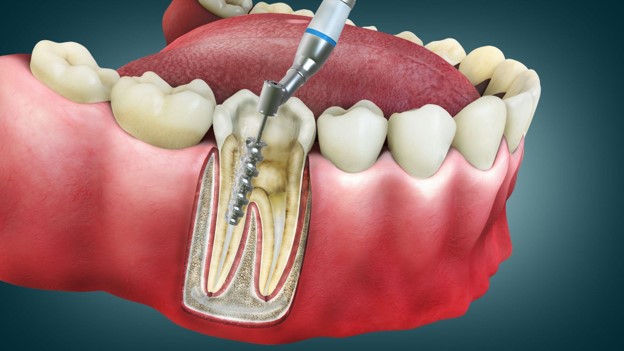
Inside every tooth, beneath the enamel and the dentin, sits a chamber of soft tissue called the pulp. It contains blood vessels, connective tissue, immune cells, and sensory nerve fibers, and it runs from the crown of the tooth down through narrow canals to openings at the root tips. During development the pulp builds dentin and shapes the tooth; in a fully formed adult tooth its work is largely defensive and sensory. The pulp sits in a rigid, sealed container, which is the source of its vulnerability. When it becomes inflamed, it cannot swell outward the way an injured finger can. Pressure builds inside the chamber, blood flow is choked off, and the tissue begins to die from the inside. Once that process passes a certain point it does not reverse. The root canal Encino evaluation exists to determine where a tooth sits on that path, because recoverable pulp and irreversibly damaged pulp look identical from the outside.
Why Pain Is an Unreliable Signal in a Root Canal Encino Evaluation
Pain requires living nerve tissue to transmit it. That single fact explains most of the confusion around this subject. When pulp tissue dies, the sensory fibers die with it, and the tooth stops reporting anything at all. A tooth can be quietly necrotic for years while the patient chews on it without a thought. The most misleading version of this pattern is the tooth that ached severely for several days or a week, kept the patient awake, and then went completely silent. That silence is almost never healing. It usually marks the moment the pulp finished dying and lost the ability to signal. Many people take it as a sign the problem resolved on its own and never mention the episode again. A root canal Encino assessment treats that history as significant rather than reassuring, because the underlying infection continues in the canal space and at the root tip regardless of whether anything is felt.
The Silent Histories That Lead to a Root Canal Encino Years Later
Trauma is one of the most common quiet causes. A child falls against a coffee table and strikes an upper front tooth. It is not knocked out and not visibly chipped, so nothing further is done. Or a teenager takes an elbow during a basketball game and the tooth feels loose for a few days before settling down. In both cases the impact can sever or crush the delicate blood supply entering at the root tip. The pulp may survive on reduced circulation for years before slowly becoming necrotic, and the process is typically painless. A root canal Encino finding in an adult in their thirties is often traced back to an incident from grade school that no one connected to the tooth. The delay between the event and the diagnosis is frequently a decade or longer, which is why a dentist asks about old injuries even when the patient believes they are irrelevant.
Deep Fillings and Repeated Restorations Behind a Root Canal Encino
Restorative history matters just as much as trauma. When a cavity extends close to the pulp chamber, the filling placed to repair it sits within a fraction of a millimeter of living tissue. The pulp responds by laying down reparative dentin and walling itself off, and often that defense holds for many years. Sometimes it does not, and the tissue slowly declines under the restoration without ever becoming acutely painful. Each subsequent replacement of that filling removes a little more tooth structure, generates heat, and irritates the pulp again. A molar restored three or four times across thirty years has absorbed a cumulative insult. The root canal Encino picture that emerges in these teeth is usually chronic rather than dramatic: no sharp episode, no swelling, just a tooth quietly losing the fight. Reviewing the age and depth of existing restorations is standard, because those records point directly at which teeth deserve testing.
Cracks, Grinding, and the Gradual Path Toward a Root Canal Encino
A crack behaves differently from a cavity. It is often invisible on a radiograph because the fracture line runs parallel to the beam, and it may be too fine to see without transillumination or magnification. What it does is open a slow channel for bacteria to reach the pulp. The tissue is irritated continuously at low intensity, which the body tolerates for a long time before the pulp becomes irreversibly inflamed. Bruxism accelerates the sequence. Grinding loads teeth with forces well beyond normal chewing, flexes cusps, propagates existing cracks, and wears through enamel. Patients who grind heavily often have flattened, shortened teeth and no complaints whatsoever. A root canal Encino diagnosis in a heavy grinder frequently follows a crack that has been widening for years. The clues include wear facets, a tooth that feels odd only on release of a bite, and fracture lines that light up when a fiber optic wand is placed against the enamel.
The Dark Shadow at the Root Tip That Signals a Root Canal Encino
The most common way a symptomless problem is caught is on a routine radiograph. When pulp tissue dies, bacteria and their byproducts exit through the openings at the root tip and provoke an immune response in the surrounding bone. The body dissolves bone in that zone to contain the infection, and the resulting defect shows on film as a dark, roughly round area at the apex of the root, called a periapical radiolucency. It takes months to years to develop and enlarge, which is precisely why it is so often found by accident in a tooth the patient has never mentioned. A root canal Encino evaluation begins in earnest the moment such a shadow is identified. The lesion itself is not the disease; it is the bone’s reaction to a dead pulp above it. Comparing the current film against older images in the chart shows whether the area has been stable or steadily growing.
Cold Testing With Refrigerant in a Root Canal Encino Workup
Cold testing is the most informative single test available for pulp status, and it is simple. A cotton pellet is sprayed with refrigerant, chilled well below freezing, and touched to the tooth surface. Healthy pulp responds with a sharp sensation that disappears within a second or two of removing the pellet. That response confirms living, normally functioning nerve tissue. Two abnormal patterns matter. If the sensation lingers for many seconds after the cold is removed, sometimes throbbing, it points toward irreversible inflammation. If there is no response at all while adjacent teeth respond normally, it suggests the pulp is necrotic. Both findings move a root canal Encino discussion forward. The test has known limitations. Teeth with full coverage crowns, heavily calcified canals, and teeth in older patients may respond weakly or not at all for reasons unrelated to disease, which is one of several reasons the result is never interpreted in isolation.
Electric Pulp Testing and What It Adds to a Root Canal Encino Assessment
Electric pulp testing works on a different principle than cold. A small probe delivers a gradually increasing current to the tooth, and the patient signals the moment a tingling sensation is felt. The device is checking whether sensory nerve fibers can conduct at all, which makes it a useful cross check when cold results are ambiguous. It gives a numeric reading that can be compared tooth to tooth and recorded in the chart. The test is essentially binary in meaning: it indicates vital or nonvital, and it does not distinguish reversible from irreversible inflammation. It also produces false readings under specific conditions, including partially necrotic pulp in a multi rooted molar where one canal still contains living tissue, and in immature teeth with incompletely formed roots. Within a root canal Encino workup its value comes from agreement or disagreement with the cold result rather than from the number on its own.
Percussion, Palpation, Probing, and Bite Testing in a Root Canal Encino Exam
Several quick clinical tests examine the tissues around the tooth rather than the pulp itself. Percussion involves tapping the tooth with the end of a mirror handle; tenderness suggests inflammation in the ligament surrounding the root, which often accompanies a dying pulp. Palpation means pressing firmly on the gum over the root tip, where soreness or a soft swelling indicates infection has reached the bone surface. Periodontal probing measures the sulcus around the entire tooth and separates a gum origin problem from a pulp origin problem, since a deep isolated defect can mean a vertical root fracture rather than a root canal Encino problem. Bite testing with a tooth slooth, a small plastic device placed on one cusp at a time, isolates cracks by reproducing pain on release of pressure. Throughout all of this, a matching tooth on the opposite side serves as the control, establishing what normal feels like for that particular patient.
Why a Single Test Never Confirms a Root Canal Encino Diagnosis
Every one of these tests can mislead on its own. Cold testing depends on the patient’s report, which varies with anxiety and attention. Electric pulp testing can register a response from residual vital tissue in one canal of a molar whose other canals are dead. Percussion tenderness can come from a recent high filling or from clenching. A radiolucency at an apex can occasionally represent normal anatomy, such as the mental foramen or an incisive canal overlapping the root on a two dimensional image. Diagnosis is therefore built from a pattern, not a data point. A tooth with no cold response, no electric response, tenderness to percussion, a periapical radiolucency, and a history of an old deep filling presents a coherent picture, and a root canal Encino recommendation rests on that convergence. When findings conflict, the appropriate response is often to retest at an interval and watch, rather than to treat on incomplete information.
How CBCT Imaging Sharpens a Root Canal Encino Diagnosis
A conventional dental radiograph compresses a three dimensional object into a flat image. Roots overlap, the dense buccal and lingual plates of bone hide small lesions behind them, and canals that curve out of the plane of the film simply do not appear. Cone beam computed tomography reconstructs the same region in three dimensions at high resolution and small field of view. Lesions too small or too poorly positioned to register on a periapical film are visible on a CBCT scan. Extra canals are found regularly, particularly the second mesiobuccal canal in upper first molars, which is present in most of those teeth and is easy to miss on a flat film. Root fractures, resorption, and the true relationship of a root tip to the sinus floor all become clear. In a root canal Encino case with confusing symptoms or an equivocal film, this imaging frequently supplies the finding that resolves the question.
Visible Signs of a Dead Pulp That Precede a Root Canal Encino
Two visible findings deserve specific mention because patients notice them and often misread them. The first is a sinus tract, commonly called a gum boil: a small pimple like bump on the gum, usually near the root tip, that may drain and disappear and then return. It is a pathway the body has created for pus to escape the bone. Because pressure never builds, the infection stays painless, which is exactly why these can persist for years while the patient assumes it is a canker sore. The second is discoloration of a single front tooth. When pulp tissue breaks down, blood pigments seep into the dentin tubules, and the tooth gradually turns gray, brown, or yellow while its neighbors stay unchanged. Neither sign hurts, and both are strong indicators. A root canal Encino examination prompted by a color change in one incisor very often confirms a pulp that died from an injury long forgotten.
Reversible and Irreversible Pulpitis in a Root Canal Encino Decision
The clinical dividing line is whether inflamed pulp can still recover. Reversible pulpitis produces brief sensitivity to cold or sweets that stops as soon as the stimulus is removed. It typically follows a new cavity, a recently placed filling, exposed root surface, or recent dental work, and it resolves when the cause is addressed. That tooth does not need endodontic treatment; it needs the irritant removed and time. Irreversible pulpitis is different. The hallmark is a response to cold that lingers well past the stimulus, often spontaneous pain, sometimes pain that worsens lying down or wakes the patient at night. At that stage the internal pressure has already compromised circulation, and no restoration will rescue the tissue. A root canal Encino recommendation applies to the irreversible category and to teeth already necrotic. Distinguishing between the two is the entire purpose of careful testing, since the treatment paths diverge completely at that point.
The Real Risk of Waiting on a Diagnosed but Painless Root Canal Encino
When a tooth feels normal, delaying is tempting. The problem is that the disease process continues on its own schedule. Bone around the root tip continues to dissolve, and a small lesion becomes a large one, which complicates healing later and can undermine the support of neighboring teeth. Infection can spread through bone into adjacent spaces, and a chronic painless situation can convert to acute swelling with very little warning, sometimes at an inconvenient or medically serious moment. Meanwhile the tooth itself keeps deteriorating. Necrotic teeth become brittle, existing cracks propagate under chewing forces, and a fracture that extends below the bone level can render a tooth unrestorable, turning a treatable root canal Encino situation into an extraction. Once the diagnosis is established, the appointment itself is straightforward: profound local anesthesia, an opening through the crown, cleaning and shaping of the canals, and sealing them, followed later by a definitive restoration.
Why Patients Choose August de Oliveira DDS for Root Canal Encino
August de Oliveira DDS is a cosmetic and implant dental practice located at 5400 Balboa Blvd #231, Encino, CA 91316, with office hours Monday through Thursday from 8 to 5 and Friday available by appointment. The practice serves patients from Encino, Sherman Oaks, Van Nuys, Tarzana, Calabasas, Woodland Hills, Studio City, and Reseda. Dr. August de Oliveira’s professional focus is digital dentistry, and the diagnostic side of that focus is directly relevant here: three dimensional imaging, digital radiography, and careful documentation of pulp testing results over time allow a questionable tooth to be tracked rather than guessed at. The office runs both chairside CEREC and full laboratory workflows, so the restorative planning that follows a root canal Encino diagnosis can be discussed at the same visit rather than deferred. The emphasis throughout is on establishing what is actually happening inside a tooth before any treatment decision is made.
Final Thoughts on Root Canal Encino
The central point is that a tooth’s comfort level is a poor measure of its health. Nerve tissue that has died cannot report, and the infection that follows advances silently in bone where nothing is felt. That is why routine radiographs matter for patients with no complaints, why an old childhood fall is worth mentioning, why a single darkened front tooth deserves examination, and why a small recurring bump on the gum is not a canker sore. It is also why a root canal Encino conclusion is reached through several tests that agree with one another rather than through any one finding.
Anyone in Encino or the surrounding communities who has noticed a discolored tooth, a bump on the gum, a tooth that once ached and went quiet, or who is simply due for an examination is welcome to contact August de Oliveira DDS at 5400 Balboa Blvd #231 to schedule an evaluation.