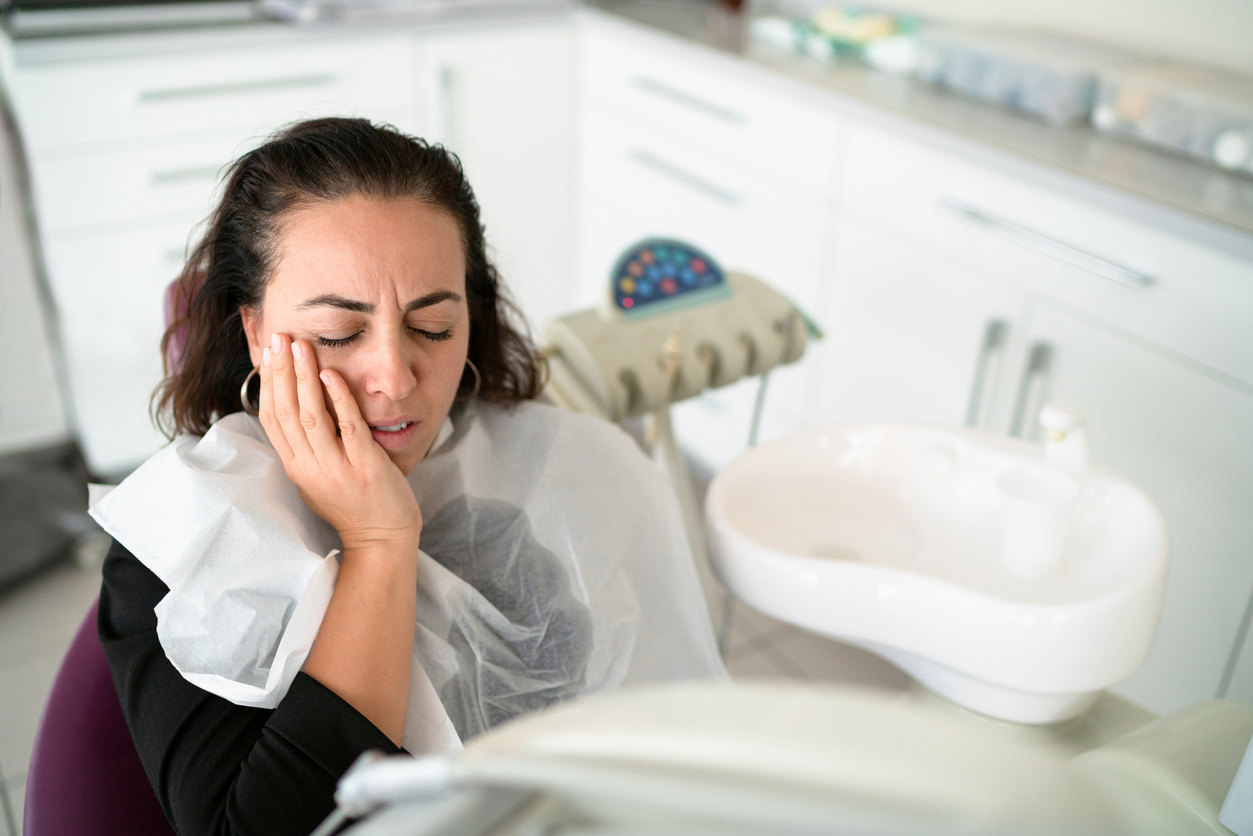
Patients who search for dental emergency care near me are usually looking for relief, and relief is what an emergency appointment is built to deliver. What often surprises patients is that relief is not the same thing as repair. An emergency visit is designed to stop a problem from getting worse: control the pain, contain the infection, protect what is left of a tooth. Finishing the treatment is a separate matter, handled at a later appointment with more time, better planning, and sometimes better information. Patients who do not know this in advance can leave a visit for dental emergency care near me feeling that the recommended follow-up is an attempt to sell additional work. It is not. This article explains what an appointment for dental emergency care near me typically accomplishes on the day, what is deliberately left for a second visit, and the clinical reasoning behind that division of labor.
Why a Visit for Dental Emergency Care Near Me Ends With a Plan
Dental emergency care focuses on one urgent question: what must happen today to stop the problem from worsening? That is narrower than a routine dental visit. The dentist may have limited time, no previous images, and a patient in significant discomfort. The immediate goal is to control the urgent problem and schedule work that requires careful planning.
The visit ends with a stabilized patient and a written plan. The tooth may feel quieter. The infection may no longer advance. A broken edge may stop cutting the tongue. A crown, completed root canal, extraction discussion, or replacement plan needs a separate appointment with adequate time.
Stabilization as the Goal of a First Dental Emergency Care Near Me Appointment
Stabilization has a specific purpose. In dental emergency care, it brings an acute problem to a point where it no longer worsens by the hour. The patient can eat, sleep, and function while the dentist arranges further treatment. Escalating pain becomes manageable. The dentist contains a spreading infection. Protection can prevent a fractured tooth from breaking further.
Stabilization does not restore a tooth to full health or function. It takes the tooth out of crisis. Patients may stop treatment once pain fades, but relief does not mean treatment is complete. Dentists use the term stabilization to show that the plan includes another step.
What a Temporary Filling Is Actually For in Dental Emergency Care Near Me
Dentists often place a temporary filling or temporary cement during dental emergency care. Patients may assume the tooth now has a permanent repair. It does not. The material seals out bacteria and food debris. It covers exposed dentin to reduce sensitivity. It also protects the space until the dentist chooses the permanent restoration.
Dentists choose temporary materials because they can remove them safely. These materials are weaker and less adhesive than permanent options. As a result, they cannot withstand chewing forces indefinitely. A temporary filling bridges the crisis and the repair. Its success depends on timely follow-up.
Opening a Tooth to Relieve Pressure in Dental Emergency Care Near Me
Severe pain can bring patients to dental emergency care when pressure builds inside a tooth. Inflamed or infected pulp tissue swells inside a rigid chamber. The pressure has nowhere to go. Opening the tooth and removing inflamed tissue can relieve that pressure quickly.
This procedure begins root canal treatment; it does not complete it. The dentist must still clean, shape, disinfect, and seal the canals along their full length. The tooth also usually needs a substantial restoration to prevent fracture. That work takes time, careful imaging, and sometimes more than one visit. An emergency appointment relieves pressure and seals the tooth temporarily. Completing treatment later can produce a better result than rushing it.
Swelling Addressed First During Dental Emergency Care Near Me
When swelling brings someone to dental emergency care, the dentist addresses swelling first and the source second. A dental infection can spread after bacteria escape the tooth and enter surrounding tissue. The immediate priorities are drainage and containment. This helps stop the infection from spreading into dangerous spaces.
The dentist usually treats the source after acute swelling settles. Treatment may involve root canal therapy or removing the tooth that caused the infection. Inflamed tissue responds poorly to local anesthetic. Swelling can also hide important anatomy. A short, planned delay often creates safer and more predictable conditions for definitive treatment.
A Fractured Tooth Covered Temporarily in Dental Emergency Care Near Me
During dental emergency care, the dentist may smooth, seal, and cover a fractured tooth. This removes a sharp edge that cuts the tongue or cheek. It also covers exposed dentin and protects the remaining tooth from further flexing.
The harder question is what the tooth needs permanently, and that depends on how deep the fracture runs, whether it reaches the pulp, whether it extends below the gum line, and whether enough tooth remains to hold a restoration at all. Some of those answers require imaging reviewed without time pressure. Some require watching how the tooth behaves over the following weeks. A temporary covering buys the time to answer them properly, rather than committing to a crown, a root canal, or an extraction on the strength of a hurried look.
A Lost Crown Recemented During Dental Emergency Care Near Me
A crown that has come off is a common reason patients seek dental emergency care near me, and recementing it is often quick. Quick is not the same as finished. A crown that stayed in place for years and then came loose did so for a reason, and the reason is usually underneath the crown rather than in the crown itself.
Decay at the margin where the crown meets the tooth is the most frequent cause. Loss of the tooth structure supporting the crown, a cracked core, or a failing post are others. Recementing a crown over an undiagnosed problem puts the patient back in the same position, often within months. So the emergency appointment typically recements provisionally, using a cement that can be removed easily, and schedules a proper assessment of what sits under the crown. The crown being back on the tooth is comfort and function restored, not the underlying problem resolved.
A Displaced Tooth Splinted First in Dental Emergency Care Near Me
A tooth knocked out or pushed out of position by trauma is one of the few situations where the first hour genuinely matters, and dental emergency care near me exists in large part for exactly this. The urgent work is repositioning the tooth and splinting it to the neighboring teeth so that it is held still while the supporting ligament and bone attempt to reattach.
The splint is the start of a long course of care, not the end of one. Teeth that have been displaced frequently lose pulp vitality, which means root canal treatment is often needed days or weeks later, timed according to how the tooth responds. The tooth also needs monitoring for root resorption, for changes in color, and for the stability of the surrounding bone, sometimes over a year or more. Patients who understand this from the first appointment are far less likely to read the follow-up schedule as unnecessary.
Why Complex Treatment Does Not Begin at a Dental Emergency Care Near Me Visit
There is a reason a clinician providing dental emergency care near me will stabilize a tooth rather than start a crown or a complex restoration on the spot. An unscheduled appointment is inserted into a day that was already planned. The time available is genuine but limited, and restorative work that is started and then rushed to a finish is worse dentistry than work that is scheduled properly.
There are clinical reasons as well. Acute inflammation changes how tissue responds to anesthetic and how it bleeds, both of which affect the quality of a restoration. A patient in pain has limited tolerance for a long appointment. Definitive restorative decisions depend on an assessment of the whole mouth, the bite, and the adjacent teeth, which an emergency exam focused on one acute problem does not provide. Declining to begin complex treatment during an emergency visit protects the result, not the schedule.
When a Definitive Diagnosis Needs Time After Dental Emergency Care Near Me
Not every question can be answered on the day. A meaningful share of dental emergency care near me ends with a provisional diagnosis and a planned second look, because some conditions only declare themselves over time. A tooth that has taken a blow may or may not retain a living pulp, and the tests that measure vitality are unreliable immediately after trauma. A tooth with a suspected crack may need to be observed under normal function before the extent of the crack is clear.
Infections change the picture as well. A shadow at a root tip on an image can take weeks to resolve after treatment, and the direction it moves is more informative than its appearance on any single day. Scheduling a second look is not indecision. It reflects the fact that in some cases the most accurate diagnosis available is the one made after a defined interval, with healing or deterioration supplying evidence a single appointment could not.
What the Clinician Records at a Dental Emergency Care Near Me Appointment
Because the treatment is deliberately unfinished, the note written at a visit for dental emergency care near me has to be clear enough for whoever completes it. That note describes what was found, what was done, which material was placed, and specifically what remains outstanding, so the next clinician is not reconstructing the plan from scratch. It is written on the assumption that a different set of hands may finish the work.
The useful detail is largely procedural. Which canals were opened and which were not. What kind of temporary material was used and roughly how long it is expected to hold. Whether the tooth was tested for vitality and what the result was. What the plan assumed, and what finding would change it. A patient leaving an emergency appointment should expect to be told, in plain terms, what the next appointment is for and roughly when it should happen, so that the plan travels with the patient rather than living only in a file.
Booking the Second Appointment Before Leaving a Dental Emergency Care Near Me Visit
The single most useful thing a patient can do at the end of a visit for dental emergency care near me is book the follow-up before walking out the door. Intentions formed in a treatment chair while a tooth still aches are reliable. Intentions revisited three weeks later, once the pain is gone and ordinary life has resumed, are considerably less so. The urgency that drove the original visit fades faster than the clinical need behind it.
Booking on the way out also serves a clinical purpose. The timing of the second appointment is often part of the treatment itself. A temporary material has a working lifespan. A splinted tooth needs assessment on a schedule tied to healing. A tooth opened for drainage needs its treatment completed before bacteria recolonize the canal system. An appointment fixed to a specific date keeps the interval inside the window the plan assumed, instead of letting it stretch to whatever the calendar allows.
What Happens When Follow Up to Dental Emergency Care Near Me Is Postponed
Postponing the second appointment is common, and the consequences are predictable. The stabilizing measures put in place during dental emergency care near me are built to last weeks, not months. Temporary cement washes out or wears through. A temporary filling leaks, letting bacteria back into a tooth that was cleaned and sealed. A tooth opened for drainage and left unrestored becomes progressively more brittle and can fracture under ordinary chewing, sometimes at or below the gum line.
The common pattern is that a problem which was treatable with a predictable restoration becomes a problem requiring something larger, and occasionally becomes a tooth that cannot be kept at all. The pain relief achieved at the emergency visit is real, and it is exactly what makes the delay feel reasonable. A quiet tooth is not necessarily a healthy tooth. The absence of symptoms after stabilization reflects the stabilization working, not the underlying condition resolving on its own.
Warning Signs After Dental Emergency Care Near Me and When a Hospital Is Right
Some symptoms after dental emergency care near me mean returning sooner rather than waiting for the scheduled visit: pain that returns and intensifies, a temporary filling or recemented crown that comes out, new or increasing swelling, a splinted tooth that feels loose, or a bite that suddenly feels wrong. Contacting the dental office promptly is the appropriate step in each of those situations.
Other symptoms are not dental office matters at all. Difficulty breathing or difficulty swallowing, swelling that is spreading across the face or toward the eye or neck, fever accompanied by swelling, bleeding that cannot be controlled, and any head or jaw injury, including loss of consciousness, a suspected fracture, or a jaw that will not close properly, all warrant a hospital emergency department immediately rather than a call to a dental practice. A dental office is not equipped to manage a compromised airway or a rapidly spreading infection. Those situations belong in emergency medical facilities, and delay in reaching one carries real risk.
Why Patients Choose August de Oliveira DDS for Dental Emergency Care Near Me
August de Oliveira DDS practices at 5400 Balboa Blvd #231 in Encino, California, and sees patients from Encino, Sherman Oaks, Van Nuys, Tarzana, Calabasas, Woodland Hills, Studio City, and Reseda. Office hours are Monday through Thursday, 8 to 5, with Friday available by appointment.
Dr. de Oliveira’s clinical focus is digital dentistry, and the office runs both chairside CEREC workflows and full laboratory workflows. For the subject of this article, that combination matters in a practical way. When a stabilized tooth returns for its definitive restoration, the practice has more than one route to finishing it, and the route chosen is the one that suits the tooth and the patient rather than the only one available. Patients looking for dental emergency care near me in the Encino area generally want a practice that will explain the plan in plain language and then carry it through to completion. That is how the office approaches it.
Final Thoughts on Dental Emergency Care Near Me
The division between stabilization and definitive repair is not a sales structure. It is how acute dental problems are safely managed, and it exists because the conditions of an emergency appointment, limited time, acute inflammation, and incomplete information, are poor conditions for finishing complex work. Dental emergency care near me stops the deterioration and buys the time to plan. The second appointment does the repair, under conditions that let the repair last.
This article is general information. It is not a diagnosis and not medical advice, and patients with urgent symptoms should contact a dentist or physician directly rather than relying on general reading. Symptoms involving breathing, swallowing, spreading facial swelling, fever with swelling, uncontrolled bleeding, or head and jaw trauma warrant a hospital emergency department.
Patients in Encino, Sherman Oaks, Van Nuys, Tarzana, Calabasas, Woodland Hills, Studio City, and Reseda who need a problem stabilized, or a deferred treatment finished, can contact August de Oliveira DDS at 5400 Balboa Blvd #231 in Encino to schedule an appointment.