Comprehensive dental services bring several specialties together, including restorative, cosmetic, periodontal, endodontic, implant, and preventive care. Each specialty uses clinical vocabulary that may differ from the everyday words patients use. Terms such as cavity, cleaning, cap, and bite can mean different things in an office than they do in casual conversation. This article explains common differences between patient language and clinical terminology. It also shows how patients can ask for plain-language explanations before agreeing to treatment. Comprehensive dental services work best when patients and providers share a clear understanding of the terms involved.
What Comprehensive Dental Services Really Means Once Patients Walk Through the Door
The word comprehensive gets used loosely in dentistry marketing, but inside an actual office it has a specific implication: a patient with a restorative need, a cosmetic concern, and a periodontal question does not need three separate referrals. Comprehensive dental services describe a practice structured so a single treatment plan can move across specialties without the patient translating their own chart from one provider to the next. That structure is exactly where vocabulary starts to matter. A term a periodontist uses casually may be unfamiliar to a patient who has only discussed restorative work. None of this reflects a lack of intelligence on the patient’s side; it reflects specialized language built for clinical reasons that are rarely explained plainly. Comprehensive dental services, done well, include the ongoing work of narrowing that gap so a patient understands not just what is being done, but what the words for it actually mean.
Comprehensive Dental Services Begin With the Word Cavity, or Does It Mean Caries
Cavity is the word almost every patient uses, and it usually means a hole in a tooth. Caries is the clinical term, and it refers to something slightly different: the disease process itself, the ongoing bacterial breakdown of tooth structure that eventually produces that hole. The distinction matters because caries can be active or arrested, early or advanced, confined to enamel or already reaching the dentin underneath. A chart that reads incipient caries is not necessarily describing a hole that needs drilling that day; it may describe a weak spot being monitored. A patient who hears cavity assumes a filling is coming. A dentist who writes caries may be describing a much earlier stage where intervention looks completely different. Comprehensive dental services rely on this more precise vocabulary so treatment matches the actual stage of disease rather than the blunter idea of cavity or no cavity that most patients carry into the appointment.
Comprehensive Dental Services Distinguish Cleaning From Prophylaxis and Scaling and Root Planing
Patients often call every hygiene visit a cleaning. In casual conversation, that works. Clinically, however, cleaning can describe different procedures. Prophylaxis is a standard preventive cleaning for healthy gum tissue. It removes plaque and calculus above the gumline. Scaling and root planing is a deeper procedure for periodontal disease below the gumline. It cleans root surfaces that a routine prophylaxis cannot reach. These procedures are not interchangeable because they address different diagnoses. Patients may feel surprised when an office recommends scaling and root planing instead of a routine cleaning. The terminology signals a change in gum health, not a cosmetic upgrade. Comprehensive dental services use this distinction because treatment, healing time, and follow-up needs differ.
Comprehensive Dental Services Call It a Crown Long After Patients Call It a Cap
Cap is an old, informal term that predates many modern dental materials, and it survives in conversation even though dentists rarely use it internally. Crown is the clinical term, and cap tends to undersell what a crown accomplishes. A cap sounds like a covering placed over a tooth. A crown is a full-coverage restoration engineered to restore the actual structural function of a tooth, its bite force, its shape, its ability to do the job the original tooth did before decay, fracture, or a root canal weakened it. When a dentist explains that a tooth needs a crown, patients sometimes mentally file that under cap and assume a minor cosmetic step. Understanding crown as a structural, load-bearing restoration changes how seriously a patient takes the recommendation. Comprehensive dental services include this kind of restorative work often enough that the distinction between cap and crown is worth clarifying at the first mention.
Comprehensive Dental Services Chart a Spectrum From Gingivitis to Periodontitis
Gum disease is the catch-all phrase patients use, and it flattens a spectrum with clinically distinct stages. Gingivitis is inflammation confined to the gum tissue, typically reversible with improved hygiene and professional cleaning. Periodontitis describes a more advanced stage where the disease has progressed to affect the bone and connective tissue supporting the teeth, damage not fully reversible the way gingivitis often is. Calling both stages gum disease obscures a critical fact: one stage can be turned around with relatively simple changes, and the other requires more involved treatment aimed at managing rather than reversing the condition. A patient with early signs of gingivitis is in a very different position than a patient whose chart shows periodontitis, even though both might describe it the same way at home. Comprehensive dental services treat this spectrum as exactly that, tracking a patient’s position on it over years rather than treating gum disease as a single fixed diagnosis that either is or is not present.
Comprehensive Dental Services Separate the Reputation of a Root Canal From Endodontic Therapy
Few dental terms carry more baggage than root canal. Its reputation often reflects older experiences rather than modern treatment. Endodontic therapy is the clinical term for treating the tooth’s inner pulp, including its nerve and blood supply, after infection or inflammation makes recovery unlikely. Modern anesthesia and instrumentation have changed the procedure substantially. Still, the phrase root canal can make patients expect prolonged pain. In many cases, the pain happened before treatment. Endodontic therapy aims to resolve that pain rather than cause it. Avoiding treatment because of an outdated reputation can allow the underlying problem to worsen. Comprehensive dental services should explain this difference clearly.
Comprehensive Dental Services Use Restoration as a Broader Word Than Filling
Filling is the word most patients reach for whenever a tooth is repaired, but restoration is the broader clinical category, and filling is only one type within it. A restoration can be a filling, an inlay, an onlay, a crown, or a veneer, depending on how much tooth structure needs replacing and where the damage sits. The category matters because the choice among these options follows directly from how much of the original tooth remains. A small area of decay might genuinely call for a filling. A larger area, or one involving a cusp, might call for an onlay or a crown instead, options a patient expecting a simple filling might not anticipate. Using restoration as a general term often just means the specific type has not been determined yet. A patient who hears restoration and assumes filling may be surprised later when the actual recommendation differs. Comprehensive dental services use this broader vocabulary deliberately, keeping the conversation accurate before every clinical detail has been finalized.
Comprehensive Dental Services Sort Bridges, Partials, and Implants Into Separate Categories
Patients missing one or more teeth often use bridge, partial, and implant interchangeably, as though they were three names for the same idea of tooth replacement. Clinically, they describe three distinct categories with different mechanisms. A bridge is a fixed restoration anchored to the natural teeth on either side of a gap. A partial is a removable appliance that clips into place and comes out for cleaning. An implant is a titanium or ceramic post placed directly into the jawbone, functioning independently of neighboring teeth entirely. The confusion is understandable since all three solve the same visible problem, but the approach, maintenance, and impact on adjacent teeth differ substantially among them. A patient who assumes bridge and implant are the same thing might be caught off guard by the timeline, since implants generally require a healing period a bridge does not. Comprehensive dental services typically offer all three options because no single category fits every clinical situation, and a proper consultation explains why one was recommended over the other two.
Comprehensive Dental Services Draw a Line Between Whitening and Bleaching
Whitening and bleaching get used as synonyms in casual conversation and often in marketing language, but there is a meaningful distinction underneath. Bleaching refers specifically to a chemical process, typically a peroxide-based agent, that changes the tooth’s actual color beyond its natural shade. Whitening is a broader term that can include bleaching but also covers methods that simply remove surface stain. This is also where a cosmetic-versus-restorative line comes into play that patients rarely draw on their own. Bleaching a natural tooth is a cosmetic procedure with a predictable, if temporary, result. But a restoration such as a crown or filling does not respond to bleaching the way natural enamel does, so whitening plans have to account for existing restorative work rather than treat the whole mouth as one uniform surface. Comprehensive dental services that include a cosmetic component need to map out this distinction before treatment begins, since a plan built around whitening natural teeth alone can produce a mismatched result next to existing restorations.
Comprehensive Dental Services Measure Occlusion Where Patients Only Notice Bite
Bite is a word almost every patient uses casually, usually to describe a general sense that the teeth do not quite line up or that chewing feels uneven on one side. Occlusion is the clinical term, and it refers to something considerably more precise: the exact way the upper and lower teeth make contact, measured point by point rather than described in general terms. A dentist evaluating occlusion checks contact patterns across the entire arch for premature contacts, uneven wear, or forces concentrated on a single tooth. A patient describing bite is usually reporting a subjective sensation. A dentist describing occlusion is reporting a measured finding, sometimes captured with articulating paper or digital scanning. This gap matters most when occlusion contributes to a restorative problem, since a crown or filling placed without accounting for occlusion can recreate the uneven bite a patient originally complained about. Comprehensive dental services treat occlusion as a measurable variable in nearly every restorative decision, not an afterthought.
Comprehensive Dental Services Read Differently on a Chart Than in a Conversation
A treatment plan written for a dental chart is not written the same way it gets explained out loud, and the difference is intentional rather than careless. A chart entry is dense and abbreviated, built for continuity between providers; a spoken explanation is built for a patient hearing the term for the first time. The problem arises when a patient sees a portion of their own chart, in a printed summary or a patient portal, without the conversational translation that normally accompanies it. Terms that made complete sense when explained in the room can look alarming in isolation on a page. A single abbreviation can imply urgency that was never intended, or understate something needing prompt attention. This is less a flaw in either version of the language and more a reminder that a chart is a professional record, not a patient education document, even though patients increasingly access both. Comprehensive dental services benefit from providers who recognize this gap and offer to walk a patient through their own chart language.
Comprehensive Dental Services Lose Context When a Clinical Term Is Searched Online
It is common for a patient to hear an unfamiliar term during an appointment and search it later, expecting a patient-friendly explanation and often finding something more clinical, or more alarming, than intended. A search engine cannot account for the context of a particular mouth or treatment plan; it returns general information for the widest audience, sometimes describing worst-case versions with little bearing on a specific recommendation. A term a dentist used for a routine, early-stage finding can appear online next to descriptions of advanced, severe versions of the same condition, with no way for a search result to say which one applies. This is an avoidable source of anxiety, not because the information online is false, but because it is stripped of the context that made the original explanation accurate. Comprehensive dental services are best explained inside the appointment itself, where a dentist can immediately clarify which end of a spectrum a given term describes rather than leaving a patient to guess from a search result written for no one in particular.
Comprehensive Dental Services Benefit From Consistent Definitions Across Years of Visits
One advantage of staying with a single dental office over many years is not just continuity of records but continuity of language. A term explained once, in a way that made sense to a patient, can be reused at every future visit rather than reintroduced differently by a new provider. When care moves between offices or specialists, each new provider may phrase the same concept slightly differently, forcing a patient to relearn vocabulary that should have carried over. A practice that keeps comprehensive dental services under one roof can build a shared vocabulary with a patient over time, referring back to earlier explanations rather than starting from zero at every appointment. That consistency has a practical effect: a patient who already understands what occlusion or caries or endodontic therapy means from an earlier visit can absorb new information faster and ask more specific questions. Comprehensive dental services, sustained across years rather than isolated visits, turn vocabulary into something a patient accumulates rather than relearns each time.
Comprehensive Dental Services Are Easier to Discuss When Patients Ask for a Translation
Not every patient will recognize an unfamiliar term in the moment, and not every provider will remember to define every word before using it. The most reliable fix is a simple habit: asking for a term to be translated into plain language before agreeing to a recommendation. A useful question asks what a clinical word means compared to the everyday word a patient would otherwise use, since that comparison tends to surface the distinction that matters most. Another useful question asks what would happen if a recommended step were delayed, since the answer often reveals whether a term describes something urgent or something merely monitored. A third asks whether a written chart note matches what was just explained out loud, closing the gap between the spoken and written versions of the plan. Comprehensive dental services work as intended only when a patient feels comfortable pausing a conversation to ask for a word to be explained again, in different terms, before moving forward with treatment.
Why Patients Choose August de Oliveira DDS for Comprehensive Dental Services
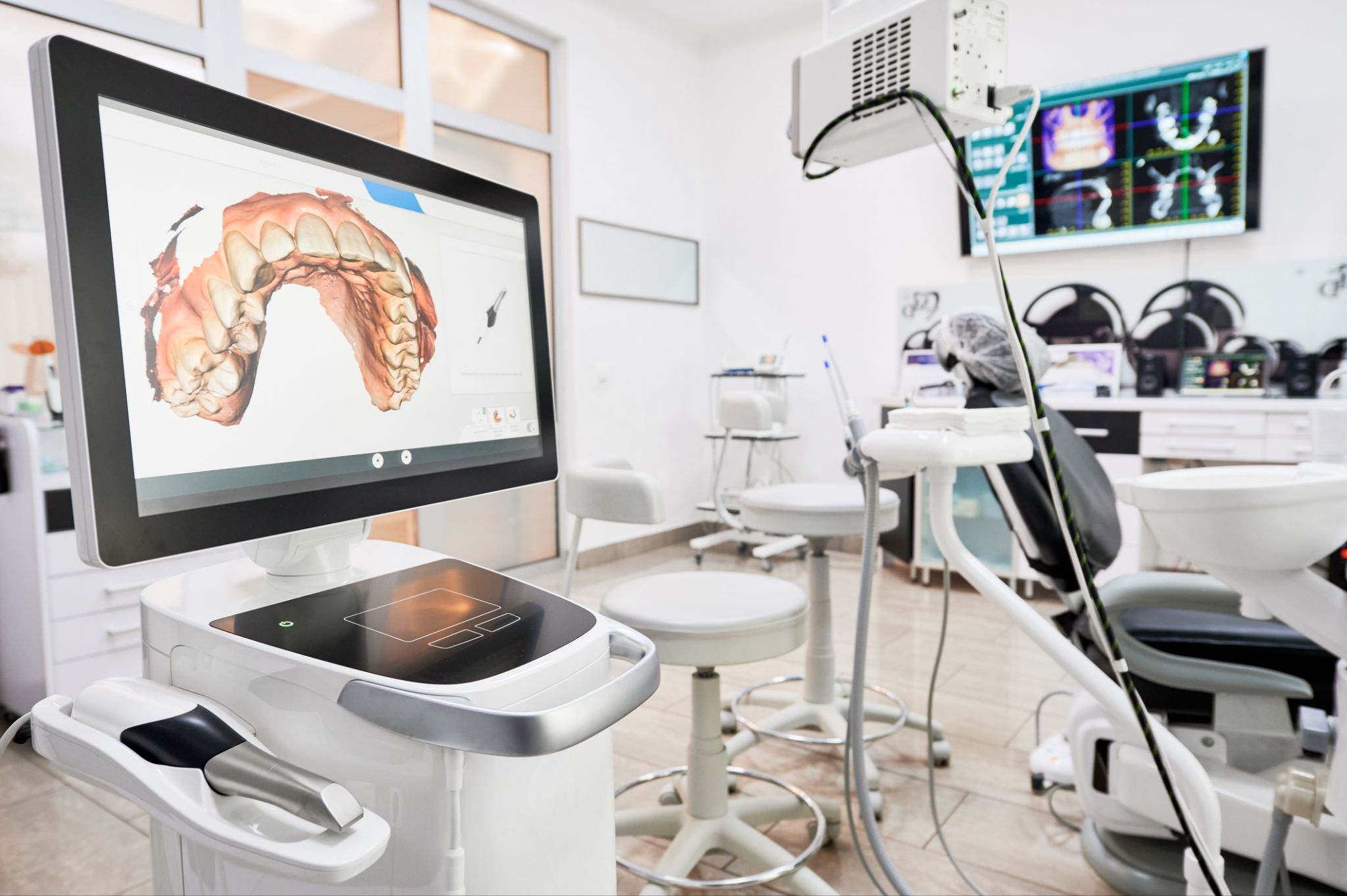
August de Oliveira DDS, located at 5400 Balboa Blvd #231 in Encino, CA 91316, was built around this terminology-conscious approach to comprehensive dental services. Dr. August de Oliveira’s clinical focus on digital dentistry gives the office two distinct workflows, chairside CEREC and full laboratory fabrication, chosen case by case rather than defaulting to one method regardless of the situation. That flexibility matters here specifically, since moving between same-day and laboratory-based restorative work creates more occasion to use precise restorative language, and more reason to explain it clearly. The office serves patients from Encino, Sherman Oaks, Van Nuys, Tarzana, Calabasas, Woodland Hills, Studio City, and Reseda, many of whom return across years for a mix of restorative, cosmetic, periodontal, and preventive needs under one roof. That range is what comprehensive dental services actually means in practice: a single office where a term defined during a periodontal conversation still applies during a restorative one, and where a patient never has to relearn vocabulary when moving between types of care within the same practice.
Final Thoughts on Comprehensive Dental Services
Dental vocabulary exists for good clinical reasons, precision, consistency, and accuracy in record keeping, but none of those reasons require a patient to feel lost during an appointment. The terms covered here, cavity and caries, cap and crown, gingivitis and periodontitis, root canal and endodontic therapy, filling and restoration, bridge and partial and implant, whitening and bleaching, bite and occlusion, describe real distinctions that shape an actual treatment plan, not stylistic preferences among professionals. A patient who understands these distinctions can ask informed questions and evaluate a recommendation on its own terms rather than react to a word’s everyday reputation. Comprehensive dental services, handled well, include plain explanation as a standard part of care, not an afterthought. A patient ready to discuss a treatment plan, or curious what a term on a recent chart means, can schedule a consultation with August de Oliveira DDS at 5400 Balboa Blvd #231, Encino, CA 91316. The office is open Monday through Thursday from 8 to 5, with Friday by appointment, serving Encino, Sherman Oaks, Van Nuys, Tarzana, Calabasas, Woodland Hills, Studio City, and Reseda.