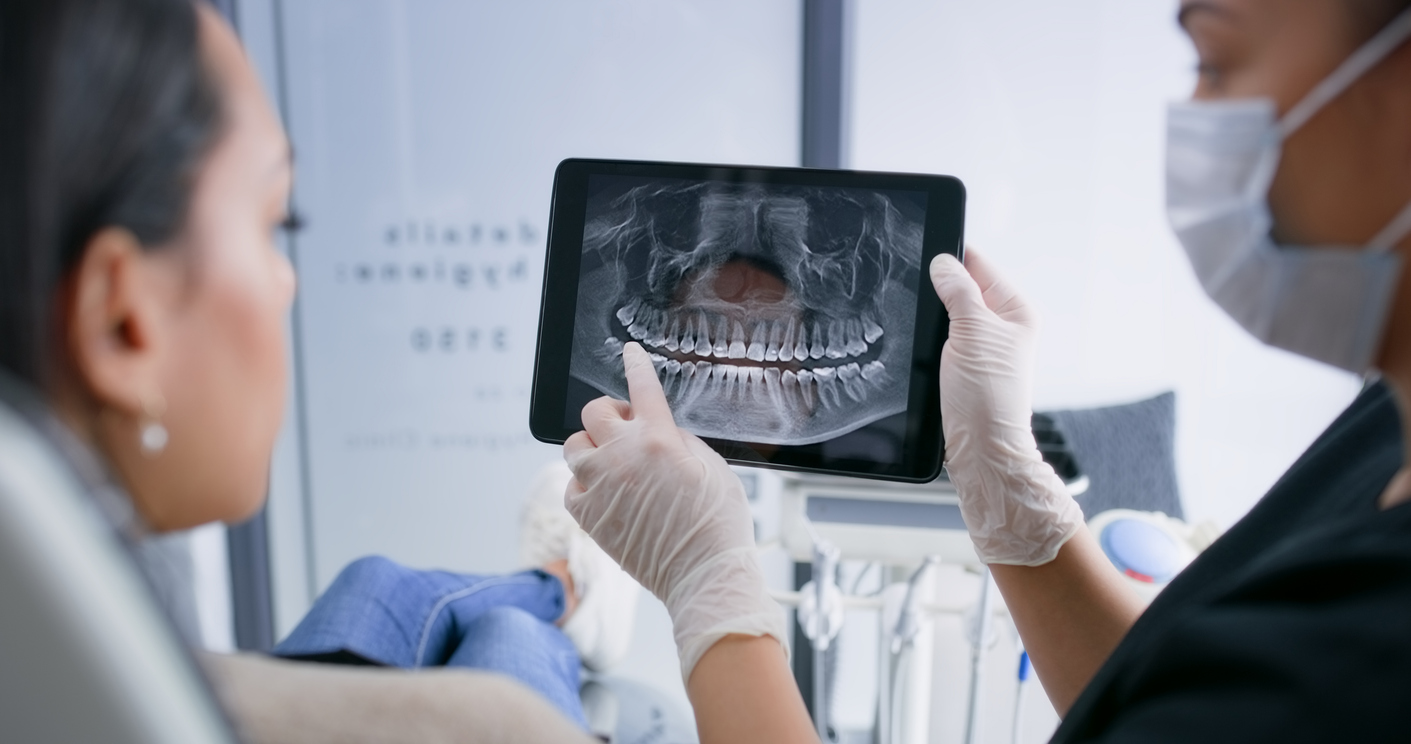
A patient arrives, sits down, has the teeth cleaned, answers a few questions, and leaves without a single appointment scheduled for treatment. Nothing was repaired, nothing was replaced, nothing was quoted. From the chair it can feel like an hour spent confirming that the hour was unnecessary. That reading misses what the appointment is for. The uneventful recall visit is the comparison appointment, the one where this year’s findings are set against last year’s and the difference between them is the actual result. Comprehensive dental services depend on that comparison more than on any single procedure, because a mouth is understood through a series of observations rather than through one. This article describes what happens during a visit that produces no treatment: what gets measured again, what gets watched, how risk is re-rated, and how the date of the next appointment is chosen. Comprehensive dental services are often most productive on the days when nothing appears to happen at all.
Why the Appointment With No Treatment Anchors Comprehensive Dental Services
Treatment appointments are the visible part of dental care, and they are also the exception. Most appointments in a long dental relationship produce nothing but a record. That record is what makes the treatment appointments possible, because every decision to intervene is a decision made against a background of prior observations. Without the uneventful visits, there is no background, and the office is left comparing a finding to nothing. In that situation almost any judgment becomes a guess about whether the condition is new, stable, or moving. Comprehensive dental services are built on the opposite footing, where a current observation sits in a line of earlier ones and its meaning comes from its place in that line. The appointment that produces no treatment is therefore not the quiet version of a real visit. It is the appointment that does the work of establishing what normal looks like for one particular mouth, which is the only standard against which an eventual change can be measured honestly.
Comparison Against the Last Visit as the Point of Comprehensive Dental Services
A recall examination is not a fresh look at the mouth. It is a comparison, and the previous record is open while it happens. The clinician is not asking whether a tooth looks acceptable today; the question is whether it looks like it did at the last appointment, and if not, in which direction it moved. That reframing changes what counts as a finding. A worn surface that has looked the same across several visits is a different situation from a surface that has changed noticeably since the last one, even if the two look similar in a photograph taken today. Direction and speed carry the information. Comprehensive dental services treat the trend as the primary output of the appointment, with the snapshot serving mainly to extend the trend by one more point. This is also why a patient who moves between offices frequently loses something that cannot be recovered by any amount of thoroughness at a single visit. A first appointment anywhere is a baseline, not a comparison.
The Watch Item and How Comprehensive Dental Services Follow It
Some findings are recorded without being treated. A small area that looks slightly different from the surrounding tooth, a restoration margin that is not failing but is no longer crisp, a spot of tissue that has changed contour: each gets noted, located, and described in the record, and then nothing further is done. These are watch items, and they are one of the most useful categories in comprehensive dental services. A watch item is not an unanswered question that the office forgot about. It is a deliberate decision that intervening now would remove more tooth structure or do more than the finding currently warrants, paired with a commitment to look at the same spot again on a known schedule. At the following visit, the note is pulled up and the site is examined specifically. If it is unchanged, it stays on the list. If it has moved, the conversation changes immediately, and the office is working from a documented starting point rather than a first impression.
Repeated Periodontal Measurements in Comprehensive Dental Services
The sequence of numbers called out during the gum examination sounds to most patients like a formality. It is one of the few parts of the visit that generates directly comparable data. Each site around each tooth is measured and recorded, and because the same sites are measured at every recall, the record builds a grid that can be read across time. The individual values matter far less than the pattern of change. A reading that has stayed consistent across several years describes stability, while a site that has shifted since the last appointment describes something active and gets attention even when the absolute value would not have alarmed anyone on a first visit. Comprehensive dental services use these repeated measurements as the main objective check on gum health, because tissue can look reasonably good at a glance while a localized area is changing. What a changed reading means is interpreted for the individual patient, alongside health as reported to the office, rather than against any fixed threshold.
Checking Existing Restorations During Comprehensive Dental Services
Every filling, crown, and other restoration in the mouth is examined at a recall visit, and the examination is looking for small changes rather than obvious failure. Restorations rarely fail suddenly. They tend to announce themselves first through subtle shifts at the edges, slight changes in how the margin feels, a different appearance where the material meets the tooth, or wear on the opposing surface that was not there before. Any of these can appear long before a patient notices anything. The value of checking during comprehensive dental services is that each restoration already has a documented history in the record, including when it was placed and how it has looked at each visit since. A margin described the same way for years and then described differently is more informative than the same margin assessed in isolation. Catching that shift early usually means the difference between a smaller repair and a larger one, and the uneventful visit is where the shift gets caught.
The Soft Tissue Examination Repeated Across Comprehensive Dental Services
Part of every recall appointment is a routine look at and feel of the soft tissues: the cheeks, the tongue, the floor of the mouth, the palate, and the tissue around the teeth. It takes a short time and generally produces no comment. The reason it is repeated rather than done once is the same reason the rest of the appointment is repeated. Tissue appearance varies naturally from person to person, so what makes a finding meaningful is usually that it differs from how the same area looked for the same patient previously. Comprehensive dental services record the routine examination even when everything appears ordinary, because the ordinary record is what gives a later observation a comparison. Patients are welcome to point out anything they have noticed themselves, and the office will include it. Most of the time the examination is simply logged as unremarkable and the appointment moves on, which is exactly what the repetition is designed to establish.
Why Photographs and Radiographs Are Spaced Out in Comprehensive Dental Services
Images are not taken at every appointment. Radiographs are taken at intervals determined for the individual patient, and photographs are typically taken less often than the clinical examination happens. Two principles sit behind the spacing. The first is that imaging is used when it is likely to change a decision, which means the interval is matched to how quickly the situation in question could realistically move. The second is that a comparison needs enough time between images for a difference to be visible, and images taken too close together often show nothing but normal variation in angle and exposure. Comprehensive dental services treat each set of images as a dated reference point rather than a routine part of a checklist. When a new image is taken, the prior set is pulled up next to it, which is where most of the useful information comes from. For a patient with a long record at one office, that stack of dated references becomes substantially more informative over time.
The Hygiene Appointment as Data Collection Within Comprehensive Dental Services
The cleaning portion of a recall visit is doing two jobs at once, and the second is easy to miss. While deposits are removed, the hygienist is in direct contact with every tooth surface in the mouth, often with better tactile access than any other part of the appointment provides. Where deposit accumulates, how much there is relative to the last visit, which areas bleed when touched and which do not, how the tissue responds to instrumentation: all of this is observed and recorded. Within comprehensive dental services the hygiene appointment therefore functions as a survey as much as a cleaning, and the notes it generates feed directly into the risk discussion later in the visit. A patient whose deposit pattern is unchanged from the previous appointment presents a very different picture from one whose pattern has shifted to a new region of the mouth. The cleaning itself is the visible outcome; the map produced along the way is the part that shapes what comes next.
How Home Care Gets Discussed in Comprehensive Dental Services
The home care conversation at a recall visit works best when it is specific to what the mouth actually shows rather than general advice delivered to everyone. If the clinical findings point to one particular region, the discussion is about that region and the practical reason it is harder to reach than the rest. If the findings are unchanged and the tissue looks the same as last time, the honest version of the conversation is that whatever is currently being done is working and does not need changing. Comprehensive dental services benefit from this restraint, because advice given indiscriminately tends to be discounted, and advice that matches something the patient can see or feel tends to be acted on. The office may demonstrate a technique, suggest a different tool for a specific space, or simply note that a previously discussed change appears to have made a measurable difference. The conversation is a report on observed results, not an assessment of effort or a lecture about habits.
Risk Reassessment and the Judgment Behind Comprehensive Dental Services
At the end of the examination the office re-rates the patient’s risk, and this step explains why two people with very similar findings on a given day can leave with different plans. Risk is not read off the current findings alone. It takes in how the mouth has behaved over previous years, how existing restorations have held up, how tissue has responded between visits, what the home care picture looks like, and how findings sit alongside health as reported to the office. A patient whose record shows a long stretch of stability is in a different position from one whose record shows repeated change, even when both mouths look comparable today. Comprehensive dental services are calibrated to that individual history rather than to an average patient. The rating is also provisional and is revisited at every subsequent appointment, which means a patient can move between categories over time in either direction as the evidence accumulates.
How the Recall Interval Is Set and Adjusted in Comprehensive Dental Services
The date of the next appointment is a clinical decision, not an administrative default. It follows directly from the risk reassessment, and it is set individually for each patient rather than according to any single rule that applies to everyone. The underlying logic is straightforward: the interval should be short enough that anything likely to change in that mouth will be caught while it is still small, and no shorter than that. For a patient whose record shows years of stability, a longer stretch between appointments may be entirely appropriate. For a patient with an active watch item or a recently changed measurement, a shorter interval gives the office a chance to see which way the situation is moving before it progresses. Comprehensive dental services treat the interval as adjustable in both directions, revisited at every visit rather than fixed once. Coverage can influence scheduling in practice, since what a plan includes varies considerably, and the office will work through those details with the patient.
What Continuity With One Office Adds to Comprehensive Dental Services
The value of all of this compounds, and it compounds only when the record stays in one place. An office that has seen the same mouth across many years knows which findings have been stable for a long time and which appeared recently, which restorations have outlasted expectations and which have needed attention, and how the tissue in a specific region tends to behave. None of that is available from a single examination, however carefully it is performed. It is the accumulated product of many visits where nothing was treated. Comprehensive dental services get progressively more precise with continuity, because the number of comparison points behind every judgment keeps growing. This is also the practical argument against treating recall visits as optional when nothing hurts. Each skipped appointment is a missing data point, and a gap in the record means the next finding has to be interpreted with less context than it would otherwise have had.
Why a Visit With No Treatment Plan Is a Good Outcome in Comprehensive Dental Services
A visit that ends without treatment being recommended can feel anticlimactic, particularly for a patient who arrived braced for news. It is worth naming plainly what such a visit actually reports. It reports that the measurements held, that the watch items did not move, that the restorations are performing, that the tissue responded as it has before, and that the current interval is working. That is a result, and it is the result the whole system is designed to produce. Comprehensive dental services are not measured by how much treatment gets scheduled; they are measured by how much treatment gets avoided through early detection and consistent monitoring. A long run of uneventful appointments usually reflects a maintenance approach that is doing its job. Patients who understand the appointment this way tend to stay on schedule, and staying on schedule is precisely what keeps subsequent appointments uneventful. The quiet visit is the outcome, not a failure to find anything interesting.
Questions Worth Asking at the End of Comprehensive Dental Services Appointments
A patient who wants more from an uneventful visit can get it by asking a few direct questions before leaving the chair. Asking what changed since the last appointment, in either direction, turns an unexplained clean bill into an actual comparison. Asking whether anything is currently on the watch list, and where it is, makes the next visit easier to follow. Asking how the gum measurements compared with the previous set gives a sense of whether the picture is stable. Asking why the next appointment was scheduled for the interval it was scheduled for surfaces the reasoning behind the recall decision. Asking whether any part of the home care routine is worth adjusting invites a specific answer rather than a general one. Comprehensive dental services become considerably more legible once these questions are part of the routine, and most offices welcome them, since a patient who understands the reasoning behind an interval is far more likely to keep the appointment.
Why Patients Choose August de Oliveira DDS for Comprehensive Dental Services
August de Oliveira DDS practices at 5400 Balboa Blvd #231 in Encino, CA 91316, with office hours Monday through Thursday from 8 to 5 and Friday appointments available by arrangement. The practice serves patients from Encino, Sherman Oaks, Van Nuys, Tarzana, Calabasas, Woodland Hills, Studio City, and Reseda. Dr. de Oliveira’s focus is digital dentistry, and the office runs both chairside CEREC and full laboratory workflows, which gives it flexibility in how a case is handled when treatment does eventually become appropriate. For the recall visits described throughout this article, the digital approach matters mainly in how records are captured and compared, since consistent documentation is what makes a year-over-year comparison meaningful. Comprehensive dental services at the practice are built around that continuity, with findings recorded in a form that can be set beside the previous visit rather than reassessed from scratch. Patients who stay with the office over time accumulate the kind of record that makes each subsequent appointment more informative than the last.
Final Thoughts on Comprehensive Dental Services
The appointment where nothing gets treated is doing more than it appears to. Measurements are repeated so they can be compared, watch items are revisited so change can be detected early, restorations are assessed against their own documented history, and the interval to the next visit is set from everything the record has accumulated rather than from a default. None of that produces a visible result on the day, which is why the visit can feel like a formality. Over years it is the part of comprehensive dental services that determines how much treatment ends up being necessary at all. This article is general information about how recall appointments work and is not a diagnosis or a recommendation for any individual patient; only an examination can establish what a particular mouth needs. Patients in Encino and the surrounding communities who are due for a recall visit, or who have been away from regular care long enough that a new baseline is needed, are invited to contact the office of August de Oliveira DDS to schedule an appointment.