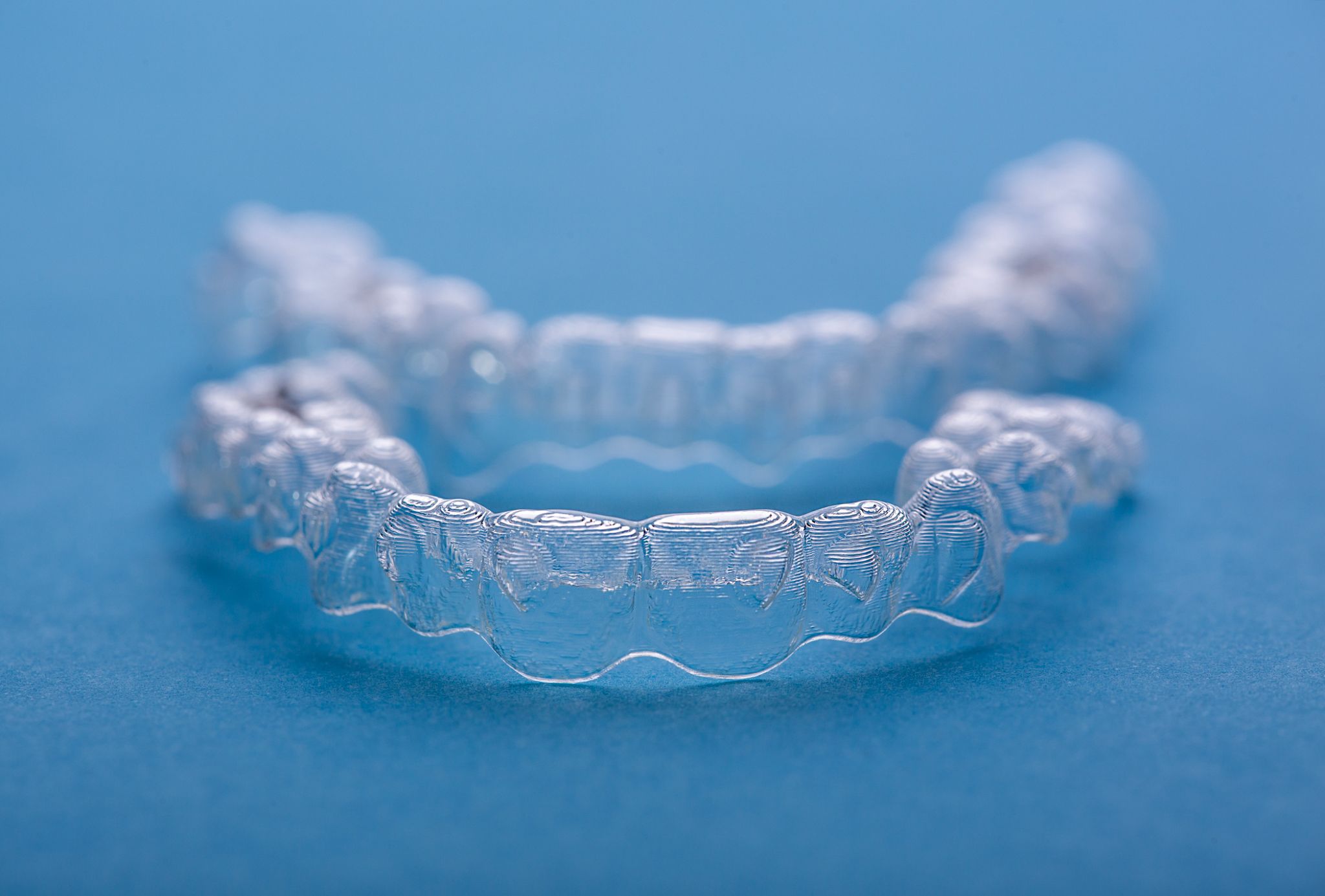
A patient finishing the first week of treatment has learned almost nothing about how the year will go. The opening days are loud: a new object rests against the teeth, speech sounds slightly different, meals require a pause, and the pressure of a first tray is unfamiliar enough to occupy a great deal of attention. None of that describes the twelfth month. By then the trays are unremarkable, the habit is automatic, and the changes worth discussing appear in photographs rather than on the tongue. Clear aligners Encino treatment runs on two timescales that rarely resemble each other, and confusing one for the other is a common reason patients misjudge their own progress. This article sets the first week beside the first year, describing what a patient notices in each and what a clinician watches for in each. The early adjustment period of clear aligners Encino care turns out to be a poor predictor of almost everything that follows. That distinction matters for anyone weighing whether to begin. Understanding both horizons makes clear aligners Encino treatment easier to evaluate honestly.
Why the First Week of Clear Aligners Encino Treatment Predicts So Little
The first week is dominated by novelty, and novelty is a poor measure of anything. Everything a patient notices in those days comes from the simple fact that the mouth has not held a tray before. Speech adjusts, saliva increases briefly, the tongue finds the edges of the plastic, and removing trays for meals interrupts a routine built over decades. Those sensations fade on a schedule of days. The movements that define clear aligners Encino treatment, by contrast, unfold over months, and almost none of them are perceptible while they happen. A patient who concludes after seven days that orthodontic treatment is harder than expected is measuring adaptation rather than difficulty. A patient who concludes after seven days that nothing is happening is measuring sensation rather than tooth movement. Both conclusions rest on the wrong evidence. Clear aligners Encino care is best judged at intervals of months, when arch photographs and scans can be set against the starting record, and the office frames the opening week to patients as an adjustment period rather than a preview of the year.
The First Tray and the Pressure Clear Aligners Encino Patients Describe
Seating the first tray produces a sensation most patients describe as snugness followed by steady pressure, concentrated on whichever teeth the plan has asked to move first. The tray is manufactured to a shape slightly different from the current arch, so it rests against certain surfaces before it rests against others, and that difference is what a patient feels. Pressure of this kind is most noticeable in the first several hours and settles over the following day or two as the teeth respond. Patients beginning clear aligners Encino treatment often report that the sensation is strongest when the tray is seated each morning and barely registers by midday. The sensation is rarely distributed evenly; a single rotated incisor may account for most of it while the remainder of the arch feels ordinary. The office explains this before the first tray is delivered, because a patient expecting uniform snugness across the whole arch can read a localized pressure point as something gone wrong in clear aligners Encino care rather than as the appliance doing exactly what it was designed to do.
Speech Adaptation in the Opening Days of Clear Aligners Encino Treatment
The tongue uses the back of the upper front teeth to form several common sounds, and a thin layer of plastic over that surface changes the contact enough to produce a lisp. This is the complaint patients raise most often in the first two days of clear aligners Encino treatment, and it is also the one that resolves fastest. The tongue adapts by trial, adjusting its position against the altered surface until familiar sounds return, and for most patients that process takes a few days rather than weeks. Reading aloud accelerates it, because deliberate practice gives the tongue more repetitions than ordinary conversation does. Patients who speak for a living sometimes plan a start date around a quieter week, which is a reasonable accommodation rather than a requirement. Removable aligners can be taken out for a presentation, though doing so routinely works against the wear the plan depends on. By the second week, most patients report that nobody else notices anything at all. Speech is the shortest lived of every adjustment clear aligners Encino patients encounter.
The Habit Problem That Defines Week One of Clear Aligners Encino
The genuine difficulty of the first week is logistics rather than sensation. Trays come out for every meal and every drink other than water, and they go back in afterward, which means a routine built around eating without thinking now requires a decision several times a day. Patients forget. A tray left wrapped in a napkin at lunch is the most common incident of the opening week, and the office would rather hear about it that afternoon than discover it at a later visit. Clear aligners Encino treatment depends on the trays being worn most of the day and night, so the practical work of week one is building a system: a case carried in a bag or a pocket, trays never set down loose, and a habit of reinserting them the moment a meal ends. Snacking is the real adversary, because each small interruption costs more wear time than the food is worth. Patients who consolidate eating into defined meals find that clear aligners Encino care fits into a day with very little friction, while patients who graze through an afternoon find the opposite.
What Tightness at Each Tray Change Means During Clear Aligners Encino Treatment
Every tray change repeats a smaller version of the first day. The new tray is shaped for a position slightly ahead of where the teeth currently sit, so it feels tight when seated and eases as the teeth follow it. Patients in clear aligners Encino treatment learn to expect this rhythm, and many schedule changes for the evening so the tightest hours pass during sleep. The intensity typically decreases as treatment proceeds, partly because the arch becomes better organized and partly because the patient has stopped treating the sensation as remarkable. A tray that feels loose from the moment it is seated is worth mentioning, since it can indicate that the previous stage did not fully express or that wear has been inconsistent. A tray that will not seat fully against the biting surfaces is worth mentioning for the same reason. The office treats these observations as useful data rather than as complaints, because a patient in clear aligners Encino care is the only person who experiences every stage and can report what the record of a single appointment will never show.
Attachments Noticed in Week One and Forgotten by Week Two of Clear Aligners Encino
Most treatment plans call for attachments, small shapes of tooth colored composite bonded to specific teeth so that the tray has something to grip. Without them, a smooth tray slides over a smooth tooth and cannot deliver the force a rotation or an uprighting movement requires. Patients beginning clear aligners Encino treatment notice attachments immediately, mostly as texture the tongue investigates and as a slight catch when a tray is removed. By the second week the tongue has stopped visiting them. Attachments are placed at the start, replaced if one chips, and polished away at the end, leaving the tooth surface as it was. Their visibility is a common question at an orthodontic consultation, and the honest answer is that they are visible at close range in bright light and largely unnoticed otherwise. That trade is what allows invisible braces of this kind to accomplish more than simple tipping, and clear aligners Encino planning places each attachment where the mechanics require it rather than where it would be least conspicuous.
The First Month, When Clear Aligners Encino Habits Stop Requiring Attention
Somewhere in the third or fourth week, the routine stops being a routine and becomes ordinary behavior. Trays come out before a meal without deliberation, the case appears automatically, and reinsertion happens while a plate is being cleared. Patients a month into clear aligners Encino treatment frequently report that the appliance has left conscious thought entirely except at tray changes. This is the first genuine milestone of the process, and it is behavioral rather than dental. Very little visible straightening has occurred by then; what has occurred is the establishment of the habit on which every later result depends. The office checks in during this period because a patient who has not built the habit by the end of the first month rarely builds it later without help, and an early conversation can still change the trajectory of the case. Cleaning routines settle here as well: trays rinsed when removed, teeth brushed before reinsertion, and the trays themselves cleaned daily. Clear aligners Encino care asks for consistency rather than effort, and consistency is an achievement of month one.
The Three Month Mark and the First Visible Clear Aligners Encino Change
The first time most patients actually see movement is in a photograph. Daily observation in a bathroom mirror is nearly useless for detecting incremental change, because the eye updates its reference point along with the teeth. A patient three months into clear aligners Encino treatment who compares a current photograph against the intake record often reacts with genuine surprise, since the rotated incisor that defined the starting arch has quietly moved into line. The office keeps those intake photographs and the original digital scan specifically for this comparison. Progress across the intervening weeks has been real but imperceptible, delivered in fractions of a millimeter per tray, which is precisely why felt sensation makes such a poor progress meter. This is also the point at which crowded teeth begin to read as an arch rather than as an overlap, and patients who were skeptical in week one often become the most consistent wearers. Clear aligners Encino treatment earns confidence at the three month mark more reliably than at any other moment in the year.
The Mid Treatment Check and What Clear Aligners Encino Clinicians Compare
A mid treatment visit is not a general inspection. The clinician compares the arch present that day against the position the plan predicted for that specific stage, tooth by tooth, looking for the gap between the two. Tracking is the term for how closely actual position follows planned position, and clear aligners Encino treatment is evaluated on tracking rather than on general appearance. Signs that a case has drifted include a tray that does not seat fully at the back, a visible space between the plastic and the biting edge of a tooth, and an attachment no longer sitting inside its receptacle. Wear habits are discussed plainly at this visit, since inconsistent wear is the most common reason a case falls behind and also the easiest to correct. Gum health, enamel surfaces and the condition of existing dental work are reviewed as well. The purpose of a mid treatment check in clear aligners Encino care is to catch a small divergence while a small adjustment can still answer it, rather than to confirm that everything looks acceptable.
Refinement Scans Partway Through Clear Aligners Encino Treatment
Partway through a case, often once the initial series of trays has been completed, the office takes a new digital scan and orders an additional set. Patients sometimes interpret this as evidence that something failed. It is instead the expected design of the process. Biology does not reproduce a computer projection exactly; some teeth move slightly less than planned, others rotate at a different pace, and the accumulated difference across an arch is corrected by rescanning the real position and planning forward from it. Refinement in clear aligners Encino treatment resembles a second coat far more than a repair. Most comprehensive cases include at least one round and many include more, which is among the reasons treatment length is described qualitatively at the start. A plan built on a scan taken many months earlier would be working from a mouth that no longer exists. Clear aligners Encino care improves precisely because it is replanned against current reality partway through, and the office explains this at the outset so the scan arrives as a scheduled step rather than a surprise.
The Later Months, When Clear Aligners Encino Progress Feels Slow
Sequencing puts the efficient movements first. Tipping a crown into line and rotating a tooth a few degrees happen relatively quickly, and they produce most of the visible improvement early. What remains in the later months is the harder work: moving a root through bone rather than tipping a crown, closing a space bodily, correcting the relationship between the upper and lower arches, and settling the back teeth into contact. These movements require more trays to produce less visible change, so patients in the later stages of clear aligners Encino treatment often feel that progress has stalled. It has not. The remaining movements are simply the slow ones, and they are also the ones that determine whether the result holds. Interproximal reduction, a conservative reshaping of the contact surfaces between teeth to create fractions of a millimeter of space, is frequently performed during this phase rather than at the beginning. Clear aligners Encino planning sequences the work this way deliberately, because early visible improvement supports the consistency the later and less dramatic stages demand.
How the Bite Changes Across a Year of Clear Aligners Encino Treatment
Bite correction is the part of the year patients are least prepared for, because it alters a sensation they have never consciously examined. Teeth meeting in a new relationship feel different, and in the middle of treatment they can feel temporarily uneven, with one side contacting before the other as individual teeth pass through intermediate positions. A patient part way through clear aligners Encino treatment may notice chewing against a slightly different area than before. This is expected while the arches reorganize, and the final trays are devoted largely to settling the teeth into even contact. The practice describes the sequence in advance, because an unexpected change in how a bite feels is unsettling in a way that a new tray never is. By the end of the year most patients have adapted so thoroughly to the corrected relationship that the original one is difficult to recall. Clear aligners Encino care is judged on how the arches meet as much as on how the front teeth look, since a straighter smile resting on an uneven bite is an incomplete result.
The Last Trays and the Shift Toward Retention After Clear Aligners Encino
The final trays usually produce the least sensation of the entire year, because the movements remaining are small and the arch already sits close to its planned position. Attention shifts at this point from movement to holding. Attachments are removed and the enamel is polished, final records are taken, and a retainer is made from a scan of the finished arches. Patients completing clear aligners Encino treatment often expect the end of the trays to be the end of the process, and it is not. Teeth sit in a ligament that has been stretched and reorganized throughout the year, and that tissue holds a memory of the original positions for a long time afterward. Retention is what prevents the memory from reasserting itself. A fixed wire behind the lower front teeth, a removable retainer worn nightly, or a combination of the two is selected according to what moved and how far. Clear aligners Encino care treats the retainer as the final appliance in the sequence rather than as an optional accessory, and the office reviews the wear schedule before the last tray changes hands.
What the First Year of Clear Aligners Encino Does Not Finish
A year of teeth straightening completes the movement and begins the maintenance. What it does not finish is everything that depends on the corrected position. Restorative work is often deferred deliberately until alignment is complete, because a crown or a veneer designed for the original arrangement would need replacing once the teeth sit differently. Whitening, if a patient wants it, is simpler once surfaces are aligned and easier to keep clean. Gum tissue adapts gradually to new tooth positions, and the contour continues to settle after the last tray. Clear aligners Encino treatment also leaves behind a maintenance obligation lasting far longer than the active phase, since retention is measured in years rather than in months. Patients considering adult orthodontics are better served by treating the first year as the construction phase of a much longer relationship with the result. The office frames clear aligners Encino care this way from the first visit, because a patient who understands that the year produces a position rather than a permanent state is far likelier to keep that position.
Why Patients Choose August de Oliveira DDS for Clear Aligners Encino
August de Oliveira DDS practices at 5400 Balboa Blvd #231, Encino, CA 91316, and sees patients Monday through Thursday from 8 to 5, with Friday available by appointment. The practice serves Encino, Sherman Oaks, Van Nuys, Tarzana, Calabasas, Woodland Hills, Studio City and Reseda, drawing patients from across the San Fernando Valley. Dr. de Oliveira’s focus is digital dentistry, and the office runs both chairside CEREC and full laboratory workflows, which matters for clear aligners Encino treatment in a specific way. Alignment frequently intersects with restorative work: a crown that constrains movement, a site being prepared for a restoration, or a tooth that will be rebuilt once it reaches its corrected position. An office equipped to plan and produce that work in house can sequence it against the movement rather than scheduling around an outside timeline. Digital records also make the comparisons clear aligners Encino care depends on straightforward, since intake scans, mid treatment scans and refinement scans all belong to one continuous record. Patients seeking Encino orthodontic care alongside general dental treatment find both handled in a single office.
Final Thoughts on Clear Aligners Encino
The first week and the first year of clear aligner treatment describe two different experiences, and only one of them predicts the result. Week one is about adaptation: a tray against the teeth, speech that corrects itself within days, and a habit built around removing aligner trays for meals. The year is about accumulated movement, measured in photographs and scans rather than in sensation, punctuated by a mid treatment check and at least one refinement, and closed out with the quieter work of settling the bite and committing to retention. Patients who understand both timescales tend to judge progress accurately and stay consistent through the stretch where change becomes hard to see. Clear aligners Encino treatment rewards that consistency more than anything else within a patient’s control. This article is general information and not a diagnosis; only an examination can determine what a specific case needs, since crowding, bite and existing dental work differ in every mouth. Patients in Encino and the surrounding communities who want to know what clear aligners Encino care would involve for their own teeth are invited to contact August de Oliveira DDS to schedule a consultation.