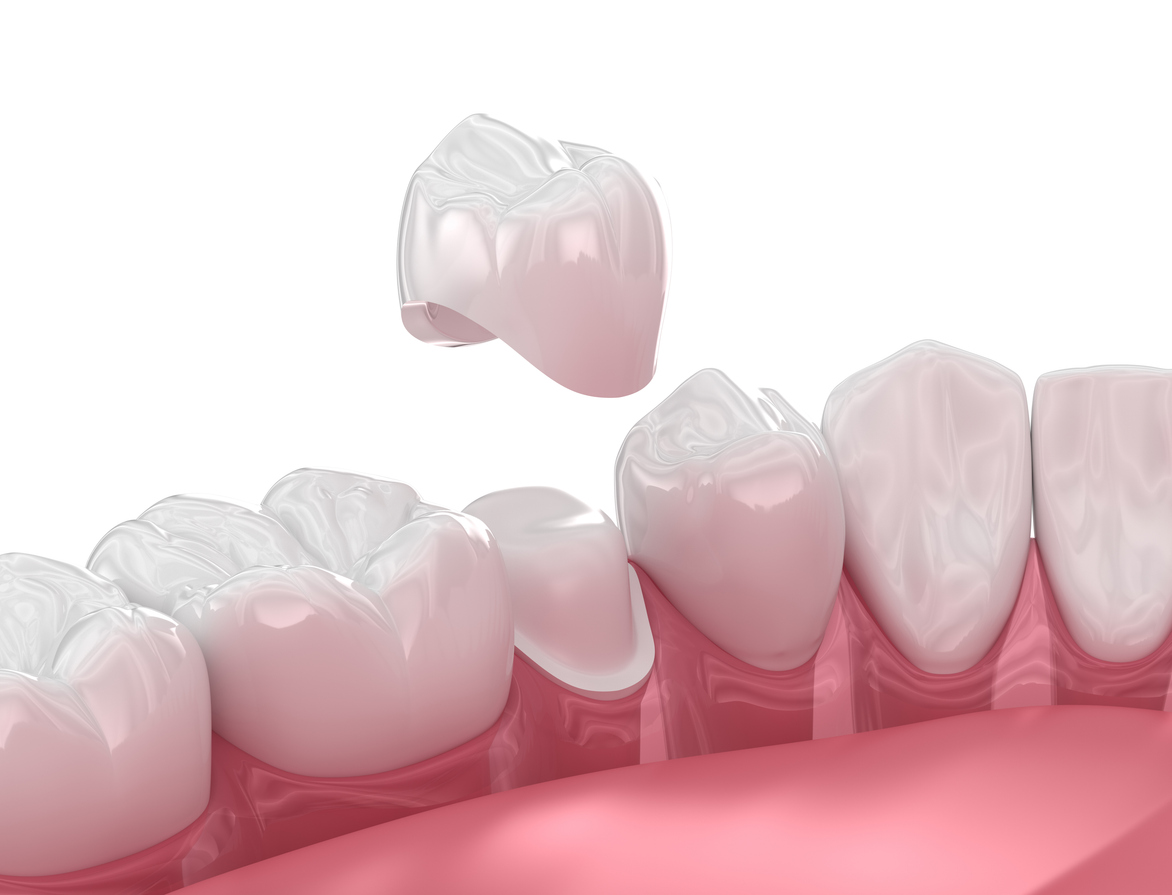
Most discussion of the CEREC Crown vs Traditional Crown question happens before a tooth is ever prepared, while a patient is deciding how a restoration will be made. There is a second, quieter version of the same question, and it arrives at a routine checkup years after the crown was cemented. A clinician looks at a restoration already in service and reads what time has done to it: the margin, the tissue around it, the contact against the neighboring tooth, the wear on the biting surface. That examination is where the CEREC Crown vs Traditional Crown comparison stops being theoretical and starts being evidence. This article walks through what a dentist actually looks at during that retrospective examination, what each finding tends to mean, and, just as importantly, what it does not mean. Much of what gets attributed to the CEREC Crown vs Traditional Crown choice turns out, on close inspection, to belong instead to the tooth, the bite, or the years in between.
Why a Crown Placed Years Ago Gets Examined in a CEREC Crown vs Traditional Crown Discussion
A crown that has been in place for years is rarely assumed to be fine simply because it has caused no complaint. Crowns change quietly. A margin can open without pain, decay can begin beneath a restoration that looks intact from above, and a contact can loosen so gradually that a patient adapts without noticing. This is why existing restorations get examined at every recall rather than having attention reserved for untreated teeth. In a CEREC Crown vs Traditional Crown discussion, this examination carries more weight than any description of how a restoration was produced, because it reports on the thing itself rather than on the process. A crown placed last month can only be judged on fit and finish. A crown that has survived several years of cold drinks, nightly clenching, flossing habits that vary by week, and whatever else daily life asks of a back tooth has been tested. The examination collects that testimony, finding by finding, before anyone discusses what happens next.
The Margin as the First Checkpoint in a CEREC Crown vs Traditional Crown Examination
The margin is where the crown ends and the tooth begins, and it is the first place an explorer tip travels. A margin that sits flush gives the instrument nothing to catch on. An open margin leaves a gap the tip drops into. A ledged margin leaves a shelf the tip rides up onto. Both are detectable within seconds by someone who has felt thousands. Years into a restoration’s life, a CEREC Crown vs Traditional Crown examination begins here, because the margin governs much of what follows: what plaque accumulates against, what the gum tissue responds to, and where decay would find an entry point. A margin can also change over time rather than starting imperfect. Recession exposes a junction that once sat below the tissue, cement at that junction can dissolve slowly, and enamel beside the crown can wear at a different rate than the restoration does. The clinician records what is present now, without assuming it describes the day the crown was seated.
What the Gum Tissue Reports Years Into a CEREC Crown vs Traditional Crown Comparison
Tissue tells on a margin. Gum that sits tight and pale pink against a crown, that does not bleed when probed, and that shows pocket depths matching neighboring teeth is reporting that the junction stays clean and the contour is reasonable. Gum that bleeds on light probing around one crown while the rest of the mouth stays quiet is reporting something local. In a CEREC Crown vs Traditional Crown comparison drawn years after placement, this tissue response is often more informative than visual inspection alone, because tissue integrates years of exposure, not a single moment. The cause is not always the restoration. An area that is hard to clean, a flossing pattern that skips that contact, a contour that holds food against the tissue, and ordinary periodontal change can all produce the same picture. A clinician notes the asymmetry first and works backward toward a reason. Healthy tissue around a crown placed years ago remains one of the more meaningful findings available at a routine visit.
The Proximal Contact and Food Impaction in a CEREC Crown vs Traditional Crown Review
The proximal contact is the point where a crown touches the tooth beside it. Floss should pass with a defined snap and then move freely. When a contact has loosened, floss slides through without resistance and food packs into the space after meals. Patients often describe this before any instrument confirms it, because food impaction is persistent and annoying. During a CEREC Crown vs Traditional Crown review, a loosened contact is recorded as a finding in itself rather than as a verdict on the original restoration. Contacts change. Teeth drift through life, an arch shifts after an extraction elsewhere, adjacent surfaces wear against each other, and a neighboring restoration placed later can alter the relationship entirely. A contact that was correct at delivery can open years afterward without any of that being an error. What matters clinically is that an open contact traps debris against gum and root surface, so it gets documented and discussed regardless of how it came to be.
Wear Facets on the Crown and the Opposing Tooth in CEREC Crown vs Traditional Crown Terms
Ceramic and enamel both wear, and the pattern of that wear is visible under good light. A clinician looks for flattened areas on the biting surface, for shiny facets that catch the light at a particular angle, and then looks at the tooth biting against it to see whether a matching facet has formed there. Wear appearing on both surfaces in a matching pattern usually describes how a jaw moves rather than a fault in either tooth. In CEREC Crown vs Traditional Crown terms, this paired reading matters, because a facet on the crown alone and a facet shared with the opposing tooth suggest different things. Heavy, generalized wear across many teeth points toward clenching or grinding, which affects every restoration in a mouth regardless of how it was made. Wear localized to one crown points toward a high spot or a particular excursive contact. Neither finding means the restoration was poorly constructed. It means the bite is being read alongside the crown.
Chipping and Surface Breakdown as a Late Finding in CEREC Crown vs Traditional Crown Comparisons
Chipping is a late finding more often than an early one. A small fracture at the edge of a ceramic surface, a rough area where the glaze has worn through, or a flake missing from a cusp tip tends to appear after a restoration has absorbed years of loading rather than in its first months. A clinician notes the location, the size, whether the surface feels sharp, and whether anything underneath is exposed. In CEREC Crown vs Traditional Crown comparisons drawn from a single examined restoration, chipping is among the easiest findings to over-read. Ceramic chips for many reasons: a parafunctional habit, an unexpected hard object in food, a bite that has shifted since placement, or a thinner region of material that later took more force than the original plan anticipated. The finding describes the present state of a surface. It does not identify a cause on its own, and it does not establish that the crown was made badly by anyone.
The Cement Line and Staining at the Junction in a CEREC Crown vs Traditional Crown Examination
At the junction between crown and tooth there is often a fine line visible to the eye, and over years that line can darken. Staining at the junction is among the most common concerns patients raise about an older crown, particularly on a front tooth where it shows. A clinician examines whether the discoloration sits on the surface, where polishing may address it, or within the junction itself, where it may indicate that the seal has changed. Within a CEREC Crown vs Traditional Crown examination, a dark line is evaluated rather than assumed to be decay. Stain accumulates from coffee, tea, red wine, and tobacco against any slightly rough junction. Some darkening reflects material sitting beneath the ceramic rather than anything happening at the margin. Some reflects a margin newly exposed through recession. The explorer, the radiograph, and the tissue response together separate a cosmetic finding from a structural one, and that distinction changes what, if anything, needs attention.
Recurrent Decay at the Margin in a CEREC Crown vs Traditional Crown Assessment
Decay that starts at the edge of an existing restoration is called recurrent decay, and it is one of the findings a clinician looks for most actively. It appears at the margin, where tooth structure meets crown, because that junction is the only place on a crowned tooth where bacteria can reach dentin. A soft catch with the explorer, a shadow at the edge, or a dark area on a radiograph can each signal it. In a CEREC Crown vs Traditional Crown assessment it is worth stating plainly what usually causes it. Recurrent decay follows plaque left undisturbed at one site over time, helped along by diet, dry mouth from medication, a margin that floss reaches poorly, and recession that exposes root surface. The workflow that produced the crown rarely belongs on that list. A crown made by either route develops decay at its margin under the same conditions, and stays free of it under the same conditions.
What the Radiograph Shows Years Later in a CEREC Crown vs Traditional Crown Evaluation
The eye reaches the outside of a crown and stops there. A radiograph reaches further. On a film taken years after placement, a clinician studies the bone level around the tooth, any radiolucent area at the margin that could represent decay, the condition of a post or core beneath the restoration, and the tissue at the root tip, where an abscess would appear long before a patient felt anything. This is the part of a CEREC Crown vs Traditional Crown evaluation that no amount of careful looking can replace. A crown can appear flawless from above while the tooth beneath it loses bone or the root quietly inflames. Films taken at intervals also allow comparison, which is usually more useful than any single image, since a stable picture across several years says something a one-time view cannot. What sits beneath a restoration frequently matters more than what sits on its surface.
Whether a Clinician Can Tell Which CEREC Crown vs Traditional Crown Workflow Produced a Restoration
A fair question at this point is whether an examiner can look at a crown and know how it was made. The honest answer is often no. Both routes produce ceramic restorations, both can produce excellent margins, both can be polished and glazed to a similar finish, and once a crown has been in service for years, whatever surface characteristics might have hinted at origin have been worn and stained toward similarity. Certain materials and construction methods leave clues, and an experienced examiner may form an impression, but an impression is not a determination. For a patient hoping the CEREC Crown vs Traditional Crown workflow behind a restoration can be settled by inspection alone, that limitation is worth knowing. The practical consequence is that an examination evaluates a crown on its own terms: the margin, the contact, the tissue, the radiograph. What a restoration is doing now is the usable information. How it was manufactured is often unrecoverable without a record.
What a Single Examination Cannot Settle in the CEREC Crown vs Traditional Crown Question
One crown examined once is a small sample, and the limits deserve to be stated. A restoration that looks excellent after many years proves that this crown, on this tooth, in this mouth, with these habits, has done well. It does not establish that the method behind it outperforms the alternative generally. A restoration showing wear or a chipped edge proves the opposite only within those same narrow bounds. Any conclusion about the CEREC Crown vs Traditional Crown question built on a single case runs past what the evidence supports, which is why clinicians treat individual findings as information about a patient rather than as arguments about technique. Mouths differ in ways that swamp the difference between workflows: clenching, acid exposure, saliva, diet, home care, how much tooth structure remained at preparation, and how the bite has changed since. A single examination describes a situation. Honest reporting means describing it as such and resisting the pull to make it mean more.
Why the Tooth Underneath Predicts More Than the CEREC Crown vs Traditional Crown Workflow Did
If one factor deserves the most weight in predicting how long a crown lasts, it is the condition of the tooth it was placed on. A crown restores a tooth that had already lost structure to a fracture, a large old filling, decay, or root canal treatment. How much sound structure remained to support the restoration, whether enough of it encircled the preparation, whether the tooth is still vital, and how the bite loads it all shape the years ahead. Set beside those, the CEREC Crown vs Traditional Crown workflow is a smaller variable. A crown on a tooth with generous remaining structure, healthy surrounding bone, and an even bite enjoys favorable conditions regardless of how it was produced. A crown on a heavily rebuilt tooth carrying a heavy functional load faces a harder assignment by either route. This is why an examination years later spends as much attention on the tooth, the bone, and the bite as on the ceramic covering them.
What the Original Treatment Record Adds to a CEREC Crown vs Traditional Crown Examination
Clinical notes from the original appointment turn a static examination into a comparison. A record may show how much tooth structure remained, whether the tooth had root canal treatment, whether a core was built beneath the crown, what the bite looked like at delivery, and what the dentist observed at seating. Radiographs from that visit establish a baseline that later images can be measured against. In a CEREC Crown vs Traditional Crown examination, the record also answers the question inspection often cannot, which is how the restoration was actually made. Patients who move between offices can request records from a previous practice, and doing so is routine. Where records are unavailable, the examination proceeds without them, and the clinician documents what is present so future visits inherit a starting point. The value of a record is not nostalgia. It converts a snapshot into a trend, and a trend supports a better judgment about whether anything needs attention.
What Patients Can Ask at a Checkup About a CEREC Crown vs Traditional Crown Restoration
A checkup is a reasonable place to ask about a crown that has been in the mouth for years, and the questions that produce useful answers tend to be specific. Patients can ask whether the margin feels sealed, whether the gum around that tooth differs from gum elsewhere, whether the contact still holds floss, whether the radiograph shows anything beneath the restoration, and whether the wear pattern suggests clenching. Those questions map directly onto what a CEREC Crown vs Traditional Crown restoration is assessed for during a recall, and each has a concrete answer. Patients can also ask what has changed since the previous visit, since change over time carries more weight than any single observation. Asking how a crown was originally made is fair as well, though the answer may depend on records rather than on inspection. Reporting symptoms helps: sensitivity to cold, food catching, a tooth that feels different when biting, or an unusual taste near one area all deserve mention.
Why Patients Choose August de Oliveira DDS for CEREC Crown vs Traditional Crown Decisions
August de Oliveira DDS, at 5400 Balboa Blvd #231 in Encino, CA 91316, examines existing restorations as a routine part of care rather than as a separate undertaking. Dr. de Oliveira’s focus is digital dentistry, and the office runs both chairside CEREC and full laboratory workflows, which means a CEREC Crown vs Traditional Crown conversation at this practice is not an argument for one path. A dentist who works in both routinely has little reason to defend either in the abstract and more reason to describe what a particular restoration on a particular tooth is actually doing. The office serves patients from Encino, Sherman Oaks, Van Nuys, Tarzana, Calabasas, Woodland Hills, Studio City, and Reseda. Hours are Monday through Thursday, 8 to 5, with Friday available by appointment. Patients with a crown placed years ago, whether it was made at this office or somewhere else entirely, can have it examined and the findings explained in plain terms during a routine visit.
Final Thoughts on CEREC Crown vs Traditional Crown
A crown examined years after placement offers a clinician more honest information than any description of how it was manufactured. The margin, the tissue, the contact, the wear pattern, the cement line, and the radiograph together describe how a restoration has performed under real conditions in one specific mouth. What that examination usually reveals is that the CEREC Crown vs Traditional Crown distinction explains less than the tooth, the bite, and years of daily use explain. Both workflows produce restorations that do well under favorable conditions and struggle under unfavorable ones. This article is general information and not a diagnosis, and only an examination can assess a specific restoration on a specific tooth. Patients in Encino, Sherman Oaks, Van Nuys, Tarzana, Calabasas, Woodland Hills, Studio City, and Reseda who have had a crown in place for years, or who have noticed something different about one, are invited to contact August de Oliveira DDS to schedule an examination.