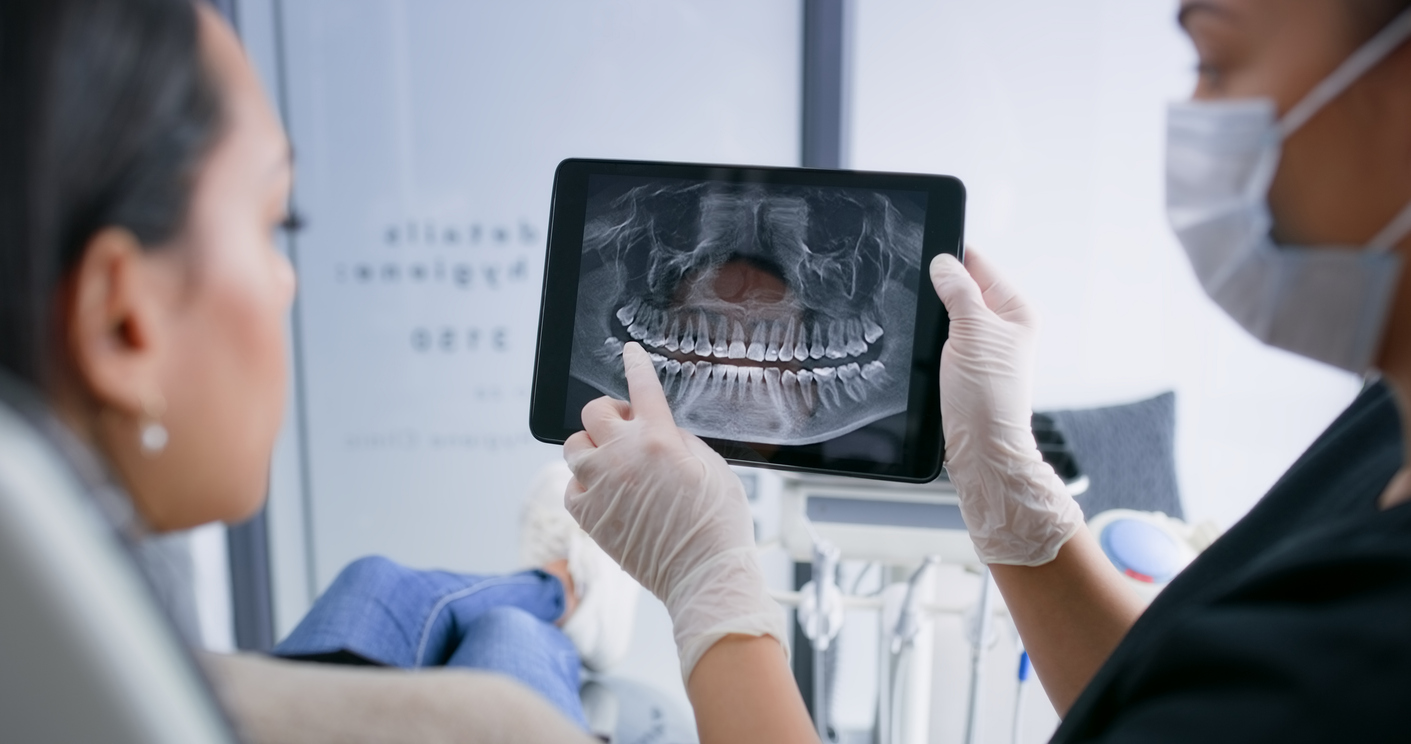
An examination produces a list. Teeth are charted, gum tissue is measured, images are reviewed, and by the end of the appointment the record holds a set of findings that may run to a dozen separate items. What happens next is the part most patients never see. Someone has to turn that list into an ordered sequence, deciding what gets handled first, what waits, and what gets looked at again before anything further is committed to. That construction work is the real substance of comprehensive dental services, and it follows a logic that is rarely spelled out loud. This article walks through how a plan is assembled and phased: the triage at the front, the foundation underneath, the restorative work that follows, and the elective work placed at the end. It also covers the parts of a plan that change over time, because a treatment plan is less a finished document than a working draft. Comprehensive dental services are built to accommodate that revision rather than resist it.
From a List of Findings to a Plan in Comprehensive Dental Services
A findings list is not a plan. It is an inventory. The examination records findings in the order the clinician moves through the mouth, often from upper right to lower right. Periodontal measurements and radiographic notes sit alongside them. Read straight down, the inventory does not show what matters most. It also does not show which items depend on others. To build comprehensive dental services, the dentist re-sorts the list. Urgency comes first, followed by stability, structure, and appearance. Two findings recorded together may fall eighteen months apart in the treatment sequence. The dentist may leave a third item unscheduled and monitor it instead. The plan must also identify dependencies. Some items cannot begin until others are complete. Ignoring those relationships can lead to work that must be redone. Clinical judgment guides this construction step between the examination and the follow-up conversation.
Triage and the Urgent Phase of Comprehensive Dental Services
The first review looks for problems that cannot wait. Pain, swelling, a fractured tooth, or a loose restoration with exposed tooth structure move to the front. Their place on the original list does not matter. Neither does the rest of the eventual plan. The urgent phase of comprehensive dental services stays narrow by design. It resolves the immediate problem and returns the mouth to a stable state. It does not begin long-term treatment. The dentist may use an interim measure for one tooth. That step lets the rest of the plan proceed without pressure from that site. The dentist may revisit urgent work later in the broader sequence. Patients may view this phase as the start of treatment. In practice, it clears the way for orderly treatment. Once no issue demands immediate attention, planning can continue at an appropriate pace.
The Foundation Phase That Anchors Comprehensive Dental Services
After urgent care, the plan moves to stabilization. This is the least visible but most important phase of comprehensive dental services. Nothing permanent should rest on conditions that are still changing. Active disease can undermine restorations. The foundation phase addresses the active process. The office provides cleaning at the depth the tissue needs. It removes material that drives the problem and recommends appropriate home-care changes. Patients may not see much change in the mirror. That is why they often question this phase. However, skipping it does not make the plan faster. It makes later phases less durable. Later work depends on stable tissue and sound tooth structure.
Why Gum Health Comes Before Restorative Comprehensive Dental Services
Gum tissue sets the boundary that every restoration must respect. Crown edges, filling margins, and restoration contours sit at or near the gumline. The gumline position guides the shape of each restoration. Inflamed tissue is often swollen. Once it settles, it can occupy a different position. A margin placed against inflamed tissue may end up in the wrong place after inflammation resolves. For this reason, comprehensive dental services place periodontal stabilization before restorative work. Cleaning also matters. Restorative work adds surfaces and contours that patients must maintain. Adding them where existing surfaces are not kept clean can compound the problem. This order protects both the restorations and the surrounding tissue.
The Re-Evaluation Appointment Built Into Comprehensive Dental Services
After the foundation phase, the office schedules an appointment to confirm that stabilization worked. The clinician takes measurements again. They assess how the tissue responded and discuss home-care habits honestly. Clinical results often reflect those habits. This re-evaluation is a decision point in comprehensive dental services. It is not a formality. If the response is good, the restorative phase can begin. The dentist may adjust planned restorations now that the tissue position has settled. If the response is partial, the office schedules more stabilization first. If an area does not respond, the clinician reconsiders the finding. A site that fails to improve may reveal something the original examination missed. Patients sometimes want to skip this visit because it does not produce a procedure. Without it, the next phase relies on an unverified assumption.
Order Within the Restorative Phase of Comprehensive Dental Services
The restorative phase has its own sequence. It does not simply start with the worst tooth. Structural priority comes first. That includes teeth that are deteriorating or risk further loss of structure. Next, the dentist considers what the bite depends on. Teeth that carry the most force or establish where the jaw closes often come earlier. Later restorations are shaped relative to them. Changing a reference point late can require adjustments to earlier work. Comprehensive dental services may also group work by region when that is safe. Completing a quadrant in fewer visits can be easier than scattering treatment across many visits. Uncertain teeth create a different challenge. When a tooth’s prognosis is unclear, the dentist may delay adjacent work. The answer affects what neighboring restorations must accomplish.
Where Elective Work Sits in Comprehensive Dental Services
Elective and cosmetic work comes last. This reflects sequence, not a judgment about its value. Appearance-driven treatment depends on a finished tooth arrangement, a settled gumline, and a stable bite. Earlier phases create those conditions. Starting elective work too soon means designing around conditions that may change. That can require the office to redo the elective work. Shade also matters. Natural teeth and restorations respond differently to appearance-focused treatment. The order of those steps affects the final match. Comprehensive dental services use this as a sequencing rule, not a gatekeeping rule. Patients interested in appearance are not being deferred. Earlier phases help make the result predictable and durable. The practice can describe the elective portion from the start, even when it is scheduled last.
The Provisional Stage That Tests Comprehensive Dental Services
Some plans include a temporary stage before permanent work begins. Provisional restorations, interim appliances, and trial arrangements let patients live with a change for several weeks. Patients can then report how it functions. That feedback is the point. A bite can measure correctly in the chair yet feel wrong while eating. A contour that looks right in the operatory can interfere with speech. In comprehensive dental services, the provisional stage tests a prediction. Adjustments are easier during this period because provisional material is meant to be modified. Once the arrangement is confirmed, the final restorations match what the provisional established. They do not simply follow the original design. Not every plan needs this stage. Plans that meaningfully change the bite or involve several teeth often do.
Sequencing Comprehensive Dental Services Around a Calendar and a Benefit Year
Clinical order sets the sequence. Practical constraints set the pace. A plan that could take four months may stretch across a year because of travel, work, caregiving, or a preference for fewer appointments. Comprehensive dental services account for those realities from the beginning. Coverage can also affect scheduling. Plans operate on a benefit year, and coverage varies from patient to patient. If a phase boundary falls near the end of a benefit year, the office may schedule a break there. That can preserve clinical order because phases are self-contained units. The clinical sequence itself does not change. Foundation work still comes before restorative work. Elective work still comes last. Flexibility belongs in the spacing between phases, not their order.
Comprehensive Dental Services for a Patient Who Wants to Go Slowly
Not every patient wants to complete a plan on the schedule the plan suggests. Some prefer to move one step at a time, some have had experiences that make longer appointments difficult, and some simply want to see how the first phase goes before agreeing to the rest. Comprehensive dental services accommodate this by identifying which items are time-sensitive and which are genuinely stable enough to wait. That distinction is the useful one. A finding that is deteriorating will cost more tooth structure the longer it waits, and the office should say so plainly. A finding that has been unchanged across several examinations can often be monitored for a while without consequence. A slow plan handled this way is a real plan, with a pace chosen deliberately and a monitoring schedule attached. What creates problems is an undefined pause, where treatment simply stops and nobody records whether the remaining items are being watched or forgotten.
When a Finding Changes Mid-Treatment in Comprehensive Dental Services
A plan is built from what the examination could see, and treatment regularly reveals more. Decay can extend further than the images suggested. A tooth can prove to have less sound structure beneath an old restoration than anticipated. A site expected to be straightforward can turn out to need a different approach entirely. When this happens, the plan changes, and comprehensive dental services are constructed to absorb that rather than break under it. The immediate decision concerns the tooth being worked on. The broader decision concerns everything downstream, because a tooth whose prognosis has shifted may change what the neighboring restorations are asked to do. A good plan is revised in both places, not just the first. Patients are entitled to hear what changed, what it means for the sequence, and what the revised plan now looks like. A plan presented as fixed and then altered without explanation leaves a patient reasonably unsure what the remaining appointments are actually for.
The Written Plan as a Shared Record in Comprehensive Dental Services
A plan that exists only in a clinician’s head is not a plan a patient can participate in. Writing it down produces a shared reference that both the office and the patient work from: the findings, the phases, the order within them, the items being monitored rather than treated, and the reasoning behind the sequence. That written record of comprehensive dental services does several jobs at once. It lets a patient review decisions at home, away from the pressure of the chair. It gives the office a stable baseline to revise against, so changes are recorded as changes rather than quietly replacing what came before. It keeps continuity when more than one clinician is involved in the same mouth. It also supplies the vocabulary for later conversations, so a question raised a year afterward has a specific document to refer back to instead of a half-remembered discussion about a tooth nobody can name precisely.
The Annual Review That Revisits Comprehensive Dental Services
Plenty of plans are never completed. Life intervenes, priorities shift, and a sequence that was meant to run eight months stops after the second phase. The response is not to abandon the plan but to review it. Each year, comprehensive dental services should include a look back at the standing plan to see which parts still apply. Some items will have been resolved. Some will have progressed and now belong earlier in the sequence than they did. Some will have been stable long enough that continued monitoring is a reasonable position rather than a deferral. New findings from the current examination get folded in, and the ordering logic runs again across the combined list. What results is a current plan rather than an old one with gaps. This review matters most for patients who stopped partway through, because the untouched remainder of a two-year-old plan reflects a mouth that no longer exists in that form.
Questions a Patient Can Ask When Comprehensive Dental Services Are Presented
A plan presented clearly invites questions, and a few are consistently worth asking. What happens if a particular item waits six months, and does the answer differ for each item. Which parts of this sequence depend on other parts, and which could be done in any order. What is the office watching rather than treating, and what would change that from monitoring to treatment. Where is the decision point in this plan, and what gets reassessed there. Which portion is structural and which is elective. How does this plan account for a patient’s overall health as reported to the office. Asking these questions about comprehensive dental services tends to produce a more useful conversation than asking whether a specific procedure is necessary, because the sequence and its reasoning are what a patient is actually agreeing to. A plan that cannot answer them is a list that has not been fully converted into a plan yet.
Why Patients Choose August de Oliveira DDS for Comprehensive Dental Services
August de Oliveira DDS practices at 5400 Balboa Blvd #231 in Encino, California, serving patients from Encino, Sherman Oaks, Van Nuys, Tarzana, Calabasas, Woodland Hills, Studio City, and Reseda. The office is open Monday through Thursday from 8 to 5, with Friday appointments available by arrangement. Dr. de Oliveira’s focus is digital dentistry, and the office runs both chairside CEREC and full laboratory workflows, which affects how a plan is sequenced in practical terms. Work suited to a single visit can be scheduled that way, while work that benefits from laboratory fabrication follows that path instead, and the plan is phased around which route each restoration takes. Comprehensive dental services built this way give a patient a clearer picture of how many appointments a phase will actually require. Digital records also make revision straightforward, since a plan that changes partway through can be updated against existing scans rather than started over from a new set of impressions.
Final Thoughts on Comprehensive Dental Services
A treatment plan is a sequence with reasoning behind it, not a price list of procedures in arbitrary order. Urgent matters are cleared, the foundation is stabilized, the result is verified at a re-evaluation, restorative work proceeds in a structural order, and elective work follows once everything beneath it has settled. Along the way the plan is tested, adjusted when findings change, written down so both sides are working from the same record, and reviewed annually whether or not it was ever finished. Patients who understand that structure tend to ask better questions and make clearer decisions about pacing. This article is general information about how plans are constructed and is not a treatment recommendation for any individual patient. Anyone in Encino or the surrounding San Fernando Valley communities who wants a plan built, explained, or revisited can contact August de Oliveira DDS at 5400 Balboa Blvd #231 in Encino to schedule an examination and a conversation about comprehensive dental services.