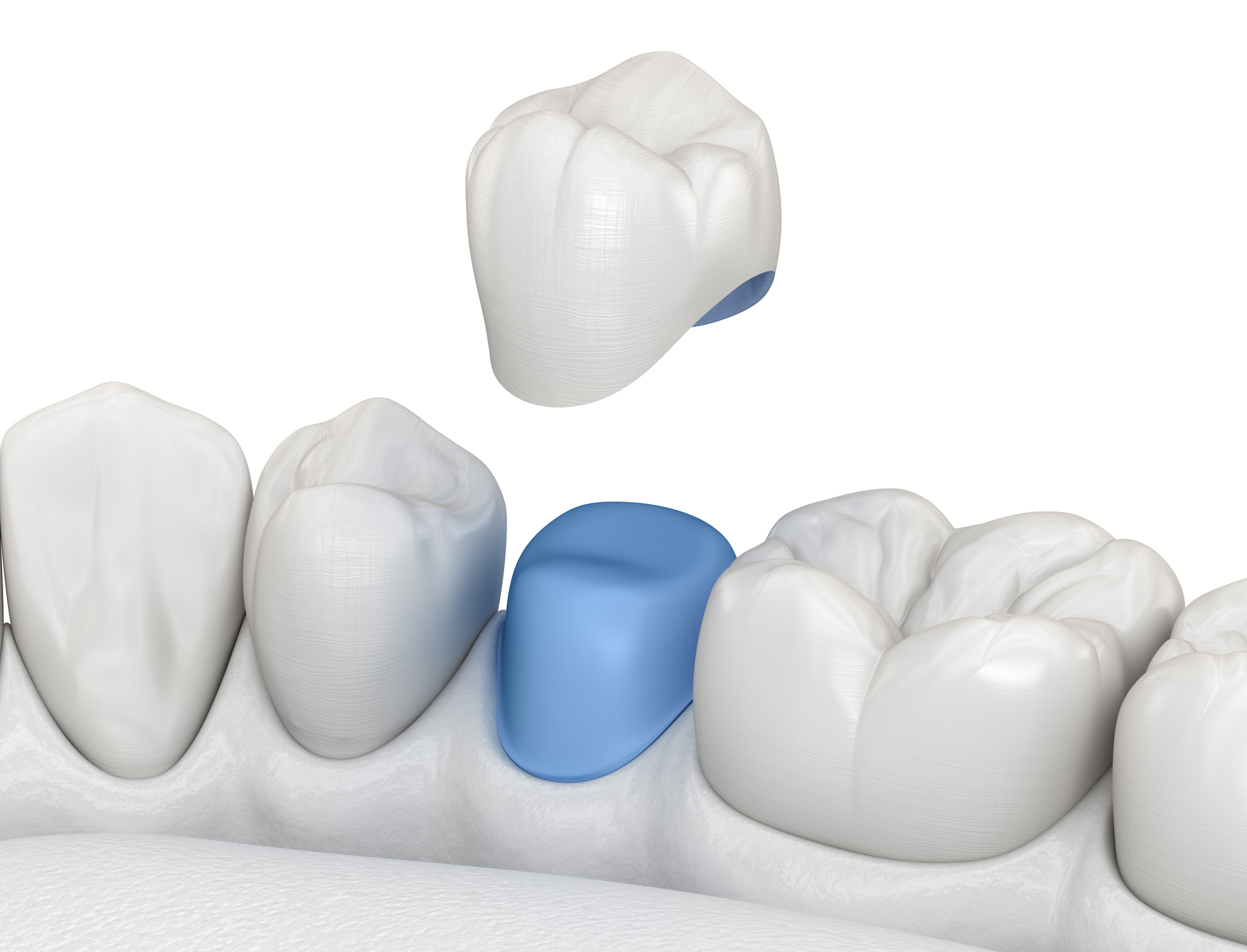
Most people researching CEREC Crown vs Traditional Crown understand the basics. A dentist designs and mills one crown chairside from a solid ceramic block in one visit. A dental laboratory makes the other crown over two visits while you wear a temporary. The more useful question is which option suits your tooth. CEREC Crown vs Traditional Crown has no permanent winner. Your tooth position, remaining healthy structure, bite force, gum tissue, and schedule all matter. Two patients who need a crown on the same tooth can receive different recommendations. This article explains the patient and tooth factors behind the decision. It can help you understand what your dentist evaluates during a consultation.
Why CEREC Crown vs Traditional Crown Is a Personal Question, Not a Universal Answer
The reason CEREC Crown vs Traditional Crown resists a single answer is that a crown is not a product you select from a shelf. It is a custom-engineered replacement for the outer architecture of a tooth, and it has to survive inside a biological system that varies enormously from person to person. Bite force in the molar region can differ by a factor of three between two healthy adults. Gum tissue thickness, saliva chemistry, enamel wear patterns, and the shade and translucency of neighboring teeth are all individual variables. A restoration that performs beautifully for a patient with a gentle bite and thick, stable gum tissue may be the wrong prescription for someone who clenches through the night. When a dentist frames CEREC Crown vs Traditional Crown as a personalized recommendation rather than a preference, it means the diagnostic findings are driving the material and workflow choice rather than habit or convenience.
The Position of the Tooth Changes the CEREC Crown vs Traditional Crown Answer
Tooth location strongly affects the CEREC Crown vs Traditional Crown decision. Posterior teeth, including premolars and molars, handle heavy chewing forces but sit outside the main visual zone. They need strength, accurate occlusal anatomy, and a tight marginal fit. Modern chairside milling can provide these features with monolithic lithium disilicate or high-strength zirconia. Anterior teeth create different priorities. Natural incisors show layered translucency, internal characterization, and an incisal halo. A single ceramic block can only approximate those details. For a front tooth beside an untouched natural neighbor, the laboratory often has an advantage. A ceramist can hand-layer feldspathic porcelain over a substructure to create depth that milling cannot reproduce alone.
How Much Tooth Structure Remains Affects CEREC Crown vs Traditional Crown
The sound tooth structure left after a dentist removes decay shapes the CEREC Crown vs Traditional Crown choice. Dentists look for a ferrule. This is a continuous band of solid tooth structure that is at least one and a half to two millimeters tall. The crown encircles that band. A healthy ferrule and adequate cuspal coverage support either workflow. A milled monolithic restoration can bond reliably to the remaining dentin. Cases become more complex when decay extends below the gumline. The same is true when a cusp fractures to bone level or a core buildup carries most of the load. These cases may need crown lengthening, orthodontic extrusion, or a custom cast post and core. Because the foundation needs rebuilding first, they often require a staged laboratory approach.
Grinding and Clenching Shift the CEREC Crown vs Traditional Crown Recommendation
Bruxism changes the CEREC Crown vs Traditional Crown discussion. Patients who grind create sustained lateral forces beyond normal chewing. These forces concentrate at margins and cuspal inclines. Dentists look for canine wear facets, scalloped tongue borders, flattened incisal edges, and morning jaw soreness. For heavy grinders, material strength often matters most. Full-contour monolithic zirconia frequently works well because it resists chipping better than layered ceramics. Both workflows can provide zirconia. For a bruxer, the choice often depends more on thickness and design than on fabrication location. A chairside zirconia crown can work for one tooth. Rebuilding several worn teeth at a new vertical dimension usually needs laboratory support and a night guard.
Your Bite Relationship Matters in CEREC Crown vs Traditional Crown
Your occlusal scheme describes how your upper and lower teeth meet and slide. It is an important part of CEREC Crown vs Traditional Crown. In a stable bite with canine guidance, canines separate the back teeth during side-to-side movement. A dentist can mill and adjust a single crown within that existing pattern. Group function, edge-to-edge bites, deep overbites, crossbites, and unstable joints increase the difficulty. A collapsing bite may require the crown to restore contact points and guidance. These cases benefit from mounted models, a facebow record, and a diagnostic wax-up. Those tools usually involve the laboratory. In complex occlusal cases, the lab supports planning that one appointment cannot provide.
Gum Health and Margin Placement in CEREC Crown vs Traditional Crown
Soft tissue has a major role in CEREC Crown vs Traditional Crown. A crown margin needs a clean, dry, visible finish line. A dentist can capture that line with an intraoral scanner or a physical impression. Inflamed, bleeding gums hide the margin and create an inaccurate record. Treat active gum disease before making a crown. Margin depth also matters. Supragingival and equigingival margins sit at or above the gumline. They are easy to scan and keep clean. Deep subgingival margins are harder to isolate. Old decay below the tissue may require retraction cord, laser troughing, or crown lengthening. The emergence profile also affects long-term gum health. Difficult tissue contours may favor a laboratory technician who can shape that transition by hand.
Teeth That Have Had Root Canal Therapy and CEREC Crown vs Traditional Crown
Teeth with root canal therapy need special consideration in the CEREC Crown vs Traditional Crown discussion. They have lost internal structure and face a higher risk of vertical fracture. Dentists generally recommend full cuspal coverage instead of a large filling. Most of these teeth respond well to a bonded monolithic ceramic crown. Completing the crown promptly after the root canal reduces the time bacteria can leak back into the canal system. That timing makes a single-visit approach appealing. Teeth with little coronal structure may need a post and core for retention. If a custom cast post is needed instead of a prefabricated fiber post, the case moves toward a laboratory sequence and another appointment.
Aesthetic Demand as a Deciding Factor in CEREC Crown vs Traditional Crown
Aesthetic expectations make CEREC Crown vs Traditional Crown personal. Patients with identical teeth can have very different standards. Some want a restoration that blends with neighboring teeth at conversational distance. Modern milled lithium disilicate can achieve that with careful staining and glazing. It works especially well for premolars or several adjacent front teeth treated together. Replacing one central incisor beside a pristine natural tooth is more demanding. The restoration must reproduce translucency gradients, an incisal halo, surface texture, and enamel light scatter. Hand-layered feldspathic porcelain over a ceramic core still offers the greatest nuance. In these cases, a skilled ceramist and custom shade appointment often provide the best match.
How Your Schedule Should Influence CEREC Crown vs Traditional Crown
Time is a legitimate clinical variable in CEREC Crown vs Traditional Crown. A single-visit crown combines preparation, scanning, milling, and cementation in one appointment. The visit typically lasts around two hours. This approach can help patients who travel often, cannot take repeated time away from work, or live out of the area. It also removes the risk of a temporary crown coming loose during a holiday or business trip. The tradeoff is one continuous appointment. Patients with back or neck conditions, young children in tow, or difficulty reclining for long periods may prefer two shorter visits. In those cases, the laboratory route may be the better fit for reasons unrelated to the tooth.
Dental Anxiety and Gag Reflex in the CEREC Crown vs Traditional Crown Decision
Patient comfort factors carry real weight in CEREC Crown vs Traditional Crown. Conventional impression trays can distress patients with a strong gag reflex. Digital intraoral scanning can help because the scanner wand is small, needs no setting time, and allows breaks. This benefit applies even when a laboratory makes the crown. Many laboratory cases now begin with a digital scan. Dental anxiety is more nuanced. Some patients prefer one appointment and one round of anesthetic. Others find a long visit overwhelming and prefer shorter segments. An honest CEREC Crown vs Traditional Crown discussion asks which profile describes you rather than assuming.
Medical History Considerations in CEREC Crown vs Traditional Crown
Health history shapes CEREC Crown vs Traditional Crown in ways patients rarely anticipate. Some conditions make long appointments difficult. These include uncontrolled hypertension, certain cardiac conditions, severe arthritis, sleep apnea that makes reclining uncomfortable, and difficulty managing blood sugar without eating. Shorter visits may work better in these situations. Patients taking anticoagulants need careful tissue management around the margins. This can add time to either workflow. Head and neck radiation or long-term bisphosphonate therapy can affect healing. These histories also influence how aggressively a dentist manipulates tissue. Medication-related dry mouth changes the oral environment and raises decay risk at crown margins. It may favor a highly polishable ceramic and a bonded rather than cemented approach. No condition automatically rules out either option. However, an accurate, current medical history belongs in every treatment decision.
How Many Teeth Need Treatment at Once in CEREC Crown vs Traditional Crown
Scope changes the calculation substantially in CEREC Crown vs Traditional Crown. A single crown, or two or three units in the same quadrant, is well within the range of a chairside workflow, and treating them together in one appointment is efficient and comfortable. As the case grows, the balance shifts. Long-span bridges, full-arch reconstruction, and cases where the vertical dimension of occlusion is being changed require diagnostic wax-ups, provisional restorations worn for weeks to test function and appearance, and often a trial phase before anything permanent is made. Those steps live in a laboratory relationship. Certain implant restorations also depend on components and custom abutments that come from a manufacturer or lab partner. When someone is rebuilding an entire smile, CEREC Crown vs Traditional Crown is not really the question anymore, because the correct answer is a laboratory-driven plan with a technician involved from the beginning.
Budget and Insurance Realities in CEREC Crown vs Traditional Crown
Practical financial factors belong in an honest CEREC Crown vs Traditional Crown conversation. Most dental insurance plans reimburse a ceramic crown at the same benefit level regardless of whether it was milled in the office or fabricated in a laboratory, because the procedure code describes the restoration rather than the manufacturing method. What can differ are the indirect costs. Two appointments mean two trips, two blocks of time away from work, and sometimes a second parking or childcare expense, while a single appointment consolidates those. There is also the small but real cost of a temporary crown that debonds and requires an unplanned visit to recement. On the other side, a highly customized anterior case with a custom shade appointment and hand-layered porcelain typically carries a higher fee because it involves more skilled labor. A transparent CEREC Crown vs Traditional Crown discussion puts these numbers in writing before treatment begins.
What a Proper CEREC Crown vs Traditional Crown Consultation Should Include
A thorough CEREC Crown vs Traditional Crown consultation looks like a diagnostic appointment, not a sales conversation. It should begin with current radiographs to evaluate the extent of decay, the health of the bone, the condition of any existing root canal treatment, and the proximity of the pulp. It should include a periodontal examination with probing depths, a bite evaluation checking guidance and any interferences, an assessment of wear facets and signs of clenching, a shade evaluation in natural light if a front tooth is involved, and photographs. A digital scan often helps both patient and dentist see the tooth clearly on screen. From those findings the dentist should be able to explain in plain language which factors in your specific case point toward one workflow and which point toward the other, name the material being recommended and why, and describe what would change the plan once the decay is fully removed. CEREC Crown vs Traditional Crown should be presented as a reasoned conclusion supported by findings you can see.
How CEREC Crown vs Traditional Crown Fits a Long-Term Treatment Plan
A crown is rarely the last thing that will ever happen in your mouth, so CEREC Crown vs Traditional Crown deserves to be considered against the full arc of your dental future. If a neighboring tooth has a guarded prognosis and may eventually need an implant or a bridge, the crown you place today should be designed with that possibility in mind, including contact points and contours that will still work if the adjacent space changes. If orthodontic treatment is being considered, moving teeth first and restoring afterward usually produces a better outcome and may avoid remaking the crown later. If you are already planning cosmetic work on the front teeth, a molar crown placed now can be matched to the shade you will eventually have rather than the shade you have today. Thinking several years ahead sometimes changes the CEREC Crown vs Traditional Crown answer, and sometimes changes the sequence rather than the choice, but it almost always improves the result.
Why Patients Choose August de Oliveira DDS for CEREC Crown vs Traditional Crown
Patients throughout Encino, Sherman Oaks, Van Nuys, Tarzana, Studio City, Woodland Hills, Calabasas, and Reseda come to August de Oliveira DDS for CEREC Crown vs Traditional Crown guidance for one central reason. The office offers both chairside digital fabrication and full laboratory workflows, so nobody is steered toward a particular method because it is the only one available. Dr. de Oliveira has built his career around digital dentistry and has spent years teaching and writing about it, which means the chairside technology is used with real depth of experience rather than as a novelty. It also means he knows precisely where its limits are and when a master ceramist should be handling the case instead. The practice is located at 5400 Balboa Blvd Suite 231 in Encino, California 91316, and is open Monday through Thursday with Fridays available by appointment. Every CEREC Crown vs Traditional Crown recommendation begins with the tooth in front of him.
Final Thoughts on CEREC Crown vs Traditional Crown
The most useful way to think about CEREC Crown vs Traditional Crown is to stop asking which method is better and start asking which one is better for this tooth, in this mouth, in this stage of your life. A molar with solid remaining structure and a stable bite in a patient with a demanding travel schedule points clearly one direction. A single central incisor beside an untouched natural neighbor, a full-arch reconstruction, a long-span bridge, or a tooth needing surgical foundation work points just as clearly the other. Everything in between depends on the details a careful examination reveals. Both approaches, executed well with appropriate materials and accurate margins, deliver restorations that last many years and function comfortably. What separates a good outcome from a disappointing one is the quality of the diagnosis that precedes it, not the machine that made the crown. If you have a tooth that needs a crown and you want a clear, honest CEREC Crown vs Traditional Crown recommendation grounded in your own clinical picture, contact August de Oliveira DDS in Encino to schedule a consultation and find out which approach genuinely fits your tooth, your bite, and your schedule.